 Arabic
 Persian
 English

The following- Now, there’s a long Persian text with two parts: one on America’s betrayal of Europeans, citing a February 19, 2025, New York Times article by Farah Stockman, and another on the “Clean Break” strategy linked to Zionist interests.
article was written by Farah Stockman and published in The New York Times on February 19, 2025. Farah Stockman joined the New York Times editorial board in 2020 and today focuses primarily on political, social, and racial issues. She previously worked at The Boston Globe, where she won the Pulitzer Prize for news reporting in 2016. She is also the author of the book “American Made: What Happens to People When Work Disappears.”
Stockman examines the recent Munich Security Conference, highlighting the unbelievable dimensions of the U.S. government’s recent- Since the current date is July 27, 2025, the article is recent and relevant.
actions in cutting support for Ukraine and the surprise this has caused among Europeans, America’s closest allies. Europeans have now concluded that over-reliance on America, especially in security and defense matters, was a mistake, and they can no longer trust the promises and slogans of American leaders. According to Stockman, the fear now gripping Europe—that their closest ally might turn into a threat against them—could even lead to exploring the option of forming a European army.
Trump’s Aggressive Warnings to Germany and Tensions in Economic Relations
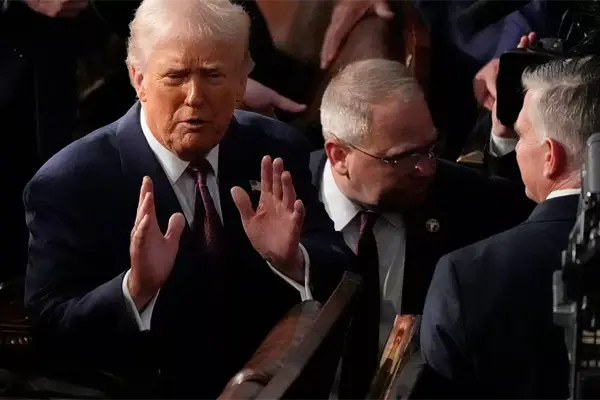
On January 29 this year, Bryan Lanza, a Trump advisor, issued a warning to a group of German manufacturers. According to Karl Haeusgen, president of the German Mechanical Engineering Industry Association (V.D.M.A.), who was present, Lanza described Trump as a “hammer,” saying you must work with him or face harm. Specifically, Lanza warned Germans not to sell hydraulics used in hospital beds and missile launchers to China. This is no small request. Germany’s economy, already shaken without Russian gas imports, could suffer even more if it stops buying goods from China.
The aggressive tone of Lanza’s remarks that day left many in the room stunned and bewildered. Their question was: Is this a form of tough love from the United States, urging Europeans to do more against a common threat? Or have Americans become a threat to them?
Shift in America’s Approach Toward Europe
This meeting was one of several recent encounters where U.S. officials have forced Europeans to reassess their relationship with their most important ally. In fact, Europeans are now facing the reality that they have been heavily dependent on a foreign power—one that no longer behaves as it once did. America, which once defended the liberal democratic world order, is now acting against it in ways that shock and bewilder its allies.
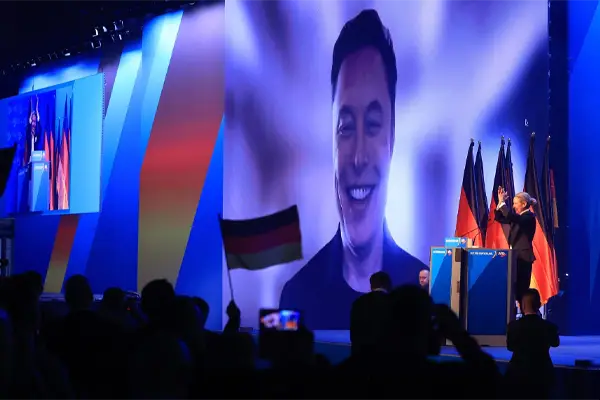
The Trump administration isn’t just asking its allies to spend more on their military defense. Its actions risk sparking a trade war that could undermine their ability to fund that very goal. The administration defends illiberal, pro-Russian political parties across Europe that could weaken the “European project” from within. The Trump government has also adopted a conciliatory tone toward Russia and held negotiation sessions with it about Ukraine’s fate, without considering its closest European allies.
This situation reminds me of the 1993 horror film “Body Snatchers,” where the protagonists gradually realize that their loved ones have been replaced by evil doppelgangers. Part of the horror stems from not knowing who to trust anymore and realizing how vulnerable you are when an ally turns into an aggressor. Imagine how Ukraine—the loudest voice in Europe fighting for its chosen democratic way of life—must feel. It seems their survival depends on American weapons and Elon Musk’s Starlink satellite network.
Fear of America Turning from Friend to Enemy
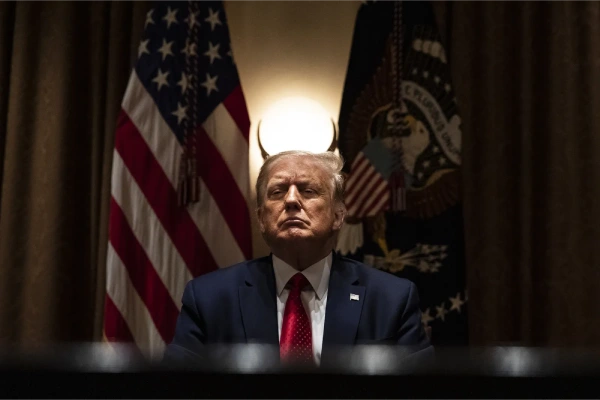
According to a poll released last week by the Friedrich Ebert Foundation, affiliated with Germany’s Social Democratic Party, even before Trump’s reelection, about one-third of people in Germany, Italy, and Britain viewed the United States as a “threat to peace and security in Europe.”
These numbers will undoubtedly rise given the Trump administration’s blatant insults to its long-time allies. Many Americans want their government to withdraw from world affairs, but their leaders still see themselves as entitled to lord over it. According to the poll, more than half of Republican respondents and nearly half of Democrats said they either don’t know which part of the world America should focus on or don’t want to focus on anything outside their borders at all. Currently, Europe is either being abandoned under the pretext of defense spending or subjected to extortion and blackmail.
Fundamental Changes in European Security and the Continent’s New Role
Imagining betrayal by a long-time ally that formed the foundation of your entire security infrastructure must feel incredibly strange and unbelievable. Peter Boehm, a Canadian senator, told me he was distressed and saddened by the shock Europeans are experiencing—something Canadians have been grappling with for about two months now.
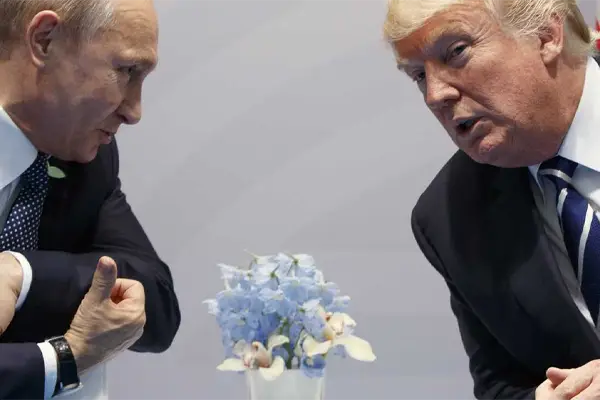
At the Munich Security Conference, one of the most important annual gatherings where officials and military leaders from around the world convene, some sought signs of an effective “grand strategy.” Their view was that since Americans are now focused on China, Europe must play a greater role in its own defense. Others thought Trump might be trying to pull Vladimir Putin away from China, much like Richard Nixon separated China from Russia in the 1970s. But as the conference continued, it increasingly seemed that Russia was separating Americans from their allies.
Questions Arising from Changes in Washington
As what is happening in Washington fully unfolds and spreads, more questions emerge. For instance, if Trump is truly preparing for competition and confrontation with China, why is he dismantling the U.S. Agency for International Development, a key tool for soft power influence worldwide? Or why does he want to deport thousands of scientists essential for maintaining America’s competitive edge? Why is he attacking higher education institutions that America needs to preserve its superiority? Why does Trump refer to half of America’s population as internal enemies? Or why does he threaten good neighbors while establishing ties with China’s closest friends? And why is he giving so much power to Elon Musk, who has significant business interests in China?
Is it possible that the current U.S. president’s decision is to deal with authoritarian regimes instead of fighting them—as the famous saying goes: “If you can’t beat your enemies, join them.”
Russia and China Exploiting the Rift Between America and Europe
The real jolt came when Vance, Trump’s vice president, in his much-anticipated speech at the conference, focused not on how their alliance could counter Chinese and Russian aggression, but on how European governments like Sweden and Britain have made things difficult for Christian conservatives and far-right extremists.
European voters are increasingly turning to pro-Russian far-right parties with authoritarian leanings, and mainstream politicians have yet to respond adequately. In the TikTok era, Russia doesn’t need to wage war to dominate Europe. Putin can easily fund far-right politicians and promote their social media accounts, toppling his enemies without firing a single shot. It’s as if the “Trojan Horse” has arrived, and Mr. Vance is ordering Europe’s liberal democracies to open the gates.
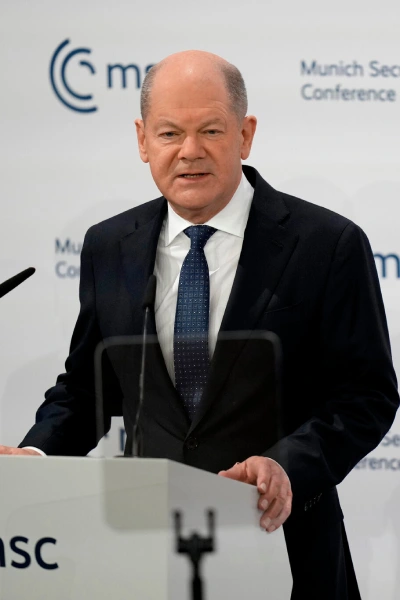
The fragility of democratic decision-making has never been so evident. It doesn’t matter how forcefully Olaf Scholz, Germany’s chancellor, reacted against Vance’s speech, emphasizing that Germany will support Ukraine to the end. German voters could make him a liar in Sunday’s elections on February 23—just as American voters, by not reelecting Biden, turned his promise that Americans would support Ukraine “for as long as it takes” into a lie.
The Need for European Self-Reliance Against New Threats
At a dinner filled with foreign ministers and a table of Ukrainian soldiers in uniform, Kellyanne Conway, Trump’s senior advisor in his first term, said the president sincerely wants to end the war and understands that Ukraine needs real security. According to reports, Vance and other U.S. officials in various sessions sought to convey that Americans are still reliable.
But the truth is, no one really knows what U.S. and Russian officials discussed behind closed doors this week. Generations have passed since Europe felt so defenseless and vulnerable. Volodymyr Zelenskyy, Ukraine’s president, who says he can’t hold elections because his country is in the midst of an existential war, clearly stated at Munich what European democracies need: their own army. Europeans must be strong because the man now threatening them only respects power. People used to say such things about Putin; now they’re saying them about Trump.
Complete withdrawal of troops, a plan to expand the war in the Middle East





No comment