 Arabic
 Persian
 English

Israel, Jonathan Cook, and the Clash of Civilizations
Jonathan Cook is a British freelance journalist who, since September 2001, has primarily resided in the Arab city of Nazareth in Israel, making him the first foreign journalist to live in one of Israel’s Arab cities. He has previously worked as a reporter and editor for regional newspapers, a sub-editor for independent national newspapers, and a journalist and staff member for The Guardian and The Observer in London. His work has also appeared in The Times, Le Monde Diplomatique, International Herald Tribune, Al-Ahram Weekly, and Al Jazeera. In February 2004, Cook founded the Nazareth Press Agency.
Cook explains his presence in Nazareth as follows: “To give myself greater freedom to reflect on the true nature of the (Israeli-Palestinian) conflict and its root causes.” He chooses the issues he addresses independently, which allows him to remain uninfluenced by mainstream media and unbound by their constraints. This means he does not focus on issues favored by those in power. Consequently, many of his reports on the Israel-Palestine issue are deemed irrational or implausible by mainstream perspectives.
Living among Arabs, Cook gained a different understanding of the issues. He observes striking and troubling similarities between the experiences of Palestinians inside Israel and those in the occupied territories. Both groups are familiar with the voraciousness of Zionism in expanding its territory and dominance, as well as its relentless efforts toward ethnic cleansing.
Cook’s Books on Israel and the Middle East
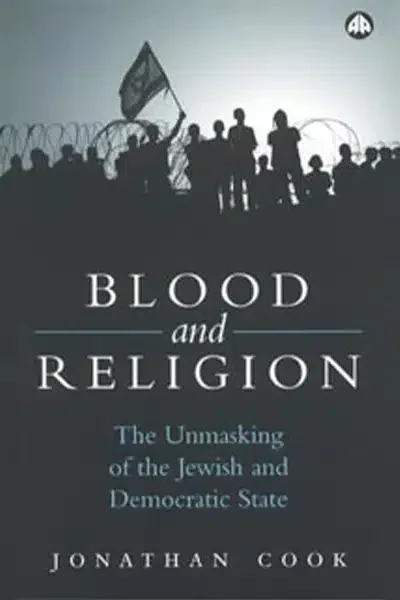
Cook has authored two significant books on this subject. His first, published in 2006, titled “Blood and Religion: The Unmasking of the Jewish and Democratic State,” details the dire situation of the 1.4 million Palestinian citizens living in the occupied territories, the discrimination they face, and the reasons and future implications of this issue, which is rarely addressed. As Cook explains, the core issue is “demography.” The rapidly growing Palestinian population threatens the existence of a “wholly Jewish state.” Israel’s response has been state-sponsored repression and violent ethnic cleansing, both in the occupied territories and against Arabs within Israel.
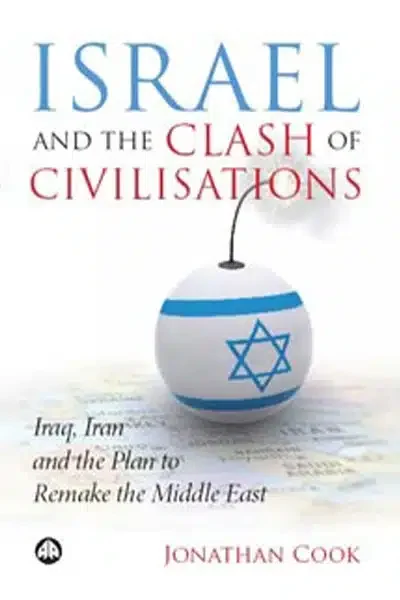
Cook’s most recent book, “Israel and the Clash of Civilizations: Iraq, Iran, and the Plan to Remake the Middle East,” has been praised by renowned author John Pilger as “one of the most cogent accounts of the modern Middle East I have read. It is superb, as the author himself serves as an unparalleled witness to events and meticulously substantiates them.” This article examines the insights from this book, alongside some of the author’s reflections on the region from the perspective of the United States.

The U.S. Invasion of Iraq and the Onset of Civil Wars
Cook begins by addressing Iraq, stating upfront: “Civil war and fragmentation were intended outcomes of the invasion of Iraq. Division and conflict were planned, and both serve U.S. interests; they are not accidental consequences of the invasion, and their origins lie in Washington. Since the early 1980s, it has been Israel’s policy to subjugate Palestinians, fragment its Arab rivals, and foster ethnic and religious divisions to maintain unchallenged regional dominance. The neoconservatives in the Bush administration adopted the same strategy. Like Israel, they sought to destabilize the region through division and conflict to achieve their goals. Notably, before the U.S. invasion, Iraq had no distinct Sunni or Shia neighborhoods and boasted the highest rate of inter-sectarian marriages in the region.”
The Advantage of the Ottomanization Plan for Israel
This strategy is referred to as “Ottomanization,” a tactic used against the Ottoman Empire to weaken a dominant Islamic force. Israel sees four advantages in this plan:
- Easier Control of Divided Minorities: Sunni-Shia conflicts can divert attention toward a larger goal—weakening and eliminating the primary threat to Israel, namely united secular Arab nationalism opposing the Jewish state.
- Enhanced Military Dominance: This allows Israel to maintain its position as a valuable ally to Washington.
- Regional Instability: This could lead to the collapse of OPEC, dominated by Saudi Arabia, weakening its influence in Washington and its ability to fund Islamic extremists and Palestinian resistance.
- Facilitating Ethnic Cleansing: It provides Israel with greater freedom to ethnically cleanse Palestinians from Israel and the occupied territories.
Post-9/11, Washington endorsed this plan, giving rise to the concept of the “War on Terror.” From their perspective, “control over the region’s oil resources could be secured by maintaining Israel’s regional hegemony and spreading instability across the Middle East and Central Asia through a new form of divide-and-rule strategy.” This plan weakens Israel’s regional rivals and suppresses Palestinian nationalism and their hopes for a genuine independent state.
Fabrications in the Overthrow of the Iraqi Regime
The removal of Saddam Hussein was justified as disarming a dangerous dictator threatening the region. However, a study by two news agencies, published on January 22, 2008, on the Public Integrity website, revealed this to be false and based on “fabricated claims.” This “comprehensive review” of the U.S. invasion of Iraq showed that the U.S. president and seven senior officials orchestrated a campaign of organized misinformation about Iraq’s threat. They aimed to manipulate public opinion and initiate a war based on entirely false pretexts.
At least 532 speeches, briefings, interviews, testimonies, and other instances were used as evidence in this study.
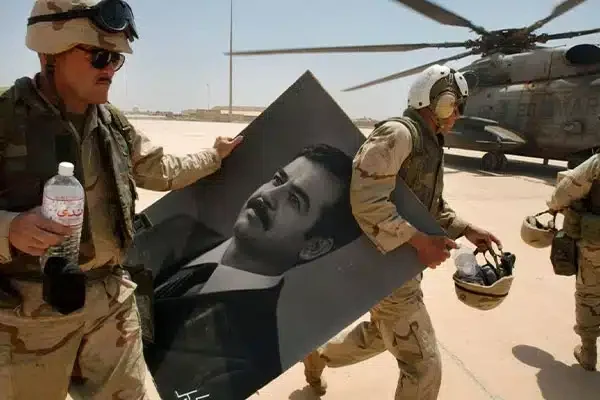
These documents demonstrate that the U.S. government’s justifications for the war were a web of lies, and the fact that Iraq possessed no weapons of mass destruction or ties to al-Qaeda made no difference. Numerous internal U.S. investigations, conducted by both Republicans and Democrats, reached the same conclusion, including the Senate Select Committee on Intelligence reports in 2004 and 2006, the “Duelfer Report” from the multinational Iraq Survey Group, and even the 9/11 Commission.
The Hidden Agenda Behind the Iraq Invasion
The study documented 935 false statements, including 232 by Bush regarding weapons of mass destruction and 28 about Iraq’s ties to al-Qaeda. Colin Powell, Dick Cheney, Donald Rumsfeld, Paul Wolfowitz, and others propagated the same lies, which escalated after August 2002 and intensified in the weeks leading up to the invasion. Mainstream media disseminated these falsehoods, and though the deception is now evident, the government has evaded responsibility, and the media has not apologized.
Moreover, no congressional investigation has addressed this, and the Iraq War continues to be falsely portrayed as a war of liberation. In reality, its clear objective was to destroy a nation, fragment and rule it, transform it into a free-market haven, and use it as a launchpad for regional dominance and control of its oil.
Saddam was never a real threat to the U.S. By the early 1990s, he had effectively been disarmed, but U.S. officials suppressed findings from UN weapons inspectors stating that “the Gulf War had incapacitated Iraq, and no unresolved disarmament issues remained.” Additionally, Saddam’s son-in-law, Hussein Kamel, who oversaw Iraq’s weapons of mass destruction program in the 1980s and early 1990s, defected to the West in 1995 and was thoroughly debriefed. He confirmed that no nuclear program existed, and Iraq had destroyed all its chemical and biological weapons and missiles.
Consequences of the Gulf War for Iraq
This story was widely reported at the time, including a front-page New York Times article on August 12 titled “Cracks in Baghdad,” among others, even after the attacks. However, these reports were later removed and did not resurface by March 2003. The consequences for Iraqis were horrific, as they gradually realized that Saddam’s invasion of Kuwait was a deception.
Four days later, Operation Desert Shield began, followed by economic sanctions. Simultaneously, U.S. troop numbers increased, and a massive Kuwait-funded propaganda campaign was launched to prepare the American public for Operation Desert Storm, which began on January 17, 1991, and ended on February 28. The war caused mass casualties and destroyed essential infrastructure, effectively reducing Iraq to a pre-industrial state.
The United Nations’ Role in Iraq
Iraq endured twelve years of the most comprehensive and devastating sanctions, including a crippling trade embargo and air blockade. Humanitarian aid was restricted, and the UN’s Oil-for-Food program, introduced in 1995, was a complete sham. Until its termination in March 2003, it provided Iraqis with the equivalent of 21 cents per day for food and 4 cents for medicine. Vital medications and other essentials were banned due to their alleged “dual-use” potential.
The war’s toll was catastrophic, leading to the resignation of two UN humanitarian aid representatives in Iraq. Denis Halliday, one of them, stated in 1998 that he resigned because he was instructed to implement a policy that amounted to genocide. This deliberate policy resulted in the deaths of one million people, including 5,000 Iraqi children.
Iraq’s Dire Conditions and Its People
Post-March 2003, street violence surged, and conditions worsened. Rising deaths and injuries, coupled with the collapse of essential services like electricity, clean water, sanitation, healthcare, and education, exacerbated by widespread unemployment and poverty, made the situation dire. An unprecedented humanitarian catastrophe caused by the occupation continues to deteriorate.
Four million Iraqi refugees fled the country or were internally displaced. One-third of the population required emergency aid. Millions couldn’t access enough food, and malnutrition was rampant. Medical care was scarce. A 2006 The Lancet study, based on Johns Hopkins University’s School of Public Health, reported 655,000 violent deaths in Iraq from March 2003 to 2008, potentially reaching 900,000.
Promoting Democracy or Permanent Occupation in Iraq?
Citing Palestinian academic Karma Nabulsi, Cook examines similarities between Iraq and occupied Palestine. She depicts two nations in a Hobbesian, anarchic society characterized by “deprivation, violence, helplessness, devastation, intimidation, governance by militias, factions, religious ideologues, and extremists, fragmented by ethnic tribalism and religious sectarianism, collaborating with traitors.”
Iraqis and resisting Palestinians demand their freedom, and polls show many want an end to the occupation. In Iraq, almost no one believes the U.S. came to liberate them or promote democracy. Most recognize Washington’s true intent: permanent occupation to control Iraq’s oil for the benefit of American oil giants. Iraqis are deprived of their natural wealth, and the U.S. ensures compliance by vetoing competitors.
A September 1978 memo from the U.S. Joint Chiefs of Staff is particularly noteworthy, outlining three Middle East objectives:
- Ensuring sustained access to oil resources.
- Preventing hegemony by any single power or coalition.
- Ensuring Israel’s survival as an independent state in stable relations with neighboring Arab countries.

Plundering Iraq’s Resources by American Companies
A major concern for U.S. planners, then and now, is “curtailing and suppressing (Arab and Iranian) nationalism in their rightful claim to their resources and denying the West access to their benefits, which could inspire other Middle Eastern countries.” Twentieth-century history shows how Britain and the U.S. controlled the Middle East, installing puppet rulers, supporting repressive dictators, eliminating non-compliant states, and plundering oil-rich nations. Iraq is now under Western exploitation, its local industry destroyed, and American companies are looting the country. The so-called “Hydrocarbon Law,” if passed, would grant major oil companies the right to plunder.
Iraq’s cabinet approved this law in February 2007, but public opposition halted its implementation.
If Iraq’s puppet parliament passes it, foreign investors will reap vast resources, leaving little for Iraqis. The law grants Iraq’s national oil company control over less than one-fifth of operational fields, while foreign oil giants gain control over all undiscovered oil reserves (the majority of Iraq’s reserves).
Contracts would be signed for 35 years, with all revenues confiscated and sent to the companies’ home countries. These profits carry no obligation to invest in Iraq’s economy, partner with Iraqi companies, hire local workers, respect union rights, or transfer new technologies.
The Start of U.S. Security Strategies in the Middle East
Since the early twentieth century, the U.S. coveted Middle Eastern oil. After World War I, Britain occupied Iraq and Kuwait, reaping the most benefits until World War II. Miscalculating Saudi Arabia’s importance, Britain allowed the Roosevelt administration to secure its oil concessions in the 1930s, initiating close U.S.-Saudi relations.
The U.S. president and Saudi king agreed that the U.S. would ensure the kingdom’s stability and security in exchange for stable oil supplies at fixed prices and the reinvestment of Saudi oil profits into U.S. military equipment. The region gained special significance, further amplified by the Carter Doctrine following the engineered ousting of the Shah of Iran in 1979. Carter declared: «Any attempt by an outside force to gain control of the Persian Gulf region will be regarded as an assault on the vital interests of the United States and will be repelled by any means necessary, including military force.».
Post-9/11, the Bush Doctrine extended Carter’s policy globally through the 2002 National Security Strategy (NSS), revised with greater intensity in 2006. Central Asia is a primary target, and Israel’s powerful lobby ensures that Washington and Tel Aviv’s interests are fully aligned.
Long-Term Campaign Against Iran
The January 2007 Herzliya Conference in Israel was notable for becoming the country’s most political event. This conference differed from others in two ways. During it, forty-two past and present US policymakers were invited, and emphasis was placed on the «extremist Shia crescent» alongside debates highlighting Iran and Hezbollah.
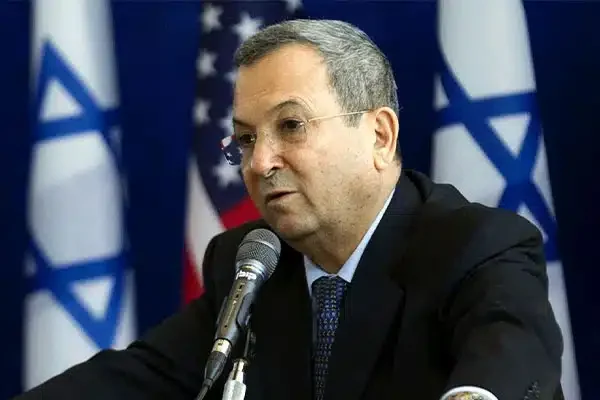
Conference participants claimed that Iran is spreading instability in the region, is close to building nuclear weapons, and will use them against Israel. In other instances, such as the January 2008 conference, statements from speakers like Ehud Barak exist, saying: «Iran’s nuclear threat is vital, and we cannot accept an Iran with a powerful nuclear military.» General Ephraim Sneh added: «Our problem is not the nuclear issue, but the Iranian regime with imperial ambitions. It hates Israel, its military power is increasing, and it has unlimited budgets.».
This rhetoric ignores the obvious facts that Ayatollah Khomeini prohibited the development of nuclear weapons. Iran’s current officials have repeatedly emphasized that the country’s nuclear development goal is only commercial, and Tehran poses no threat to Israel or any other country in the region or outside it.

Analysis of Israel’s Claims About Iran
Since the early 1990s, Israel has claimed, contrary to these clear facts, that Iran is seeking nuclear weapons and must be confronted. In 1994, Haaretz reported that Israel’s top priority is eliminating the Iranian threat to prevent the realization of its regional aspirations, as Tehran is a threat in achieving nuclear weapons, long-range missiles, and the ability to export its terrorism and revolution to overthrow secular Arab regimes. Iraq, which was already under sanctions, but Israel saw both countries as a combined threat where weakening one strengthened the other. Therefore, both had to be broken.
The claim that Iran is a nuclear threat contradicts the facts. Tehran is years away from nuclear energy production. On the other hand, Mohamed ElBaradei, head of the International Atomic Energy Agency, has reported no evidence of Iran building or attempting to build nuclear weapons. He also told the press in August 2007 that «Iran is ready to discuss all issues that have caused a crisis in the trust-building process. This is an important step. There are clear guidelines, and Iran has not delayed in implementing them. Iran deserves a chance to prove its stated goodwill.»
Assessment of Facts and Regional Strategies
The agency also reported that Iran’s uranium enrichment program had slowed, operating far below its capacity, and significant amounts of nuclear fuel were not being produced. Only 1,968 centrifuges were operational, with hundreds more in various stages of assembly or testing, and their enrichment levels were far below what is required to build a nuclear bomb. Furthermore, in December 2007, U.S. intelligence estimates indicated that Iran had halted its nuclear weapons program in 2003 and did not possess any such weapons in its arsenal.
The Bush administration and Israel avoided accepting U.S. intelligence reports and condemned the International Atomic Energy Agency. They labeled the reports as Iran’s tactic to buy time and stated that «there was no discussion among Israelis about which country should be targeted after Iraq». The goal was to isolate Iran, end its threat to Israel, but avoid the mistake of attacking and occupying another country besides Iraq that had spiraled out of control. Other options were preferred, including fueling internal conflicts, provoking instability, airstrikes, and more…
Iran: Israel’s Number One Target!
The publication of an August 2007 article titled “Considering War with Iran: A Discussion on Weapons of Mass Destruction in the Middle East” was very concerning. Dan Plesch and Martin Butcher, two British experts who were its authors, confirmed evidence of an imminent conflict but provided no specific date. They stated that everything in the planning to stop Iran seems far off. According to them, the Pentagon has plans for a “extensive, multi-front, with a full spectrum of forces” but without ground invasion. Their intent is to target 10,000 sites with bombers and long-range missiles, destroy military capabilities, nuclear energy sites, economic infrastructure, and other targets to destabilize and overthrow the regime or drag it into a “weak or failed state.”
Washington also pressured the UN to impose sanctions on Iran. In July 2006, the Security Council passed Resolution 1696, asking Tehran to halt its uranium enrichment program by August 31 or face sanctions. Then, UN Resolution 1737 in December 2006, referring to Iran’s nuclear program, imposed limited sanctions, plus subsequent ones after UN Resolution 1747 in March. On January 22, 2008, the five permanent Security Council members plus Germany agreed to a third round of sanctions. This was less than what the Bush administration wanted.
Their cat-and-mouse games continue, and the threat of broader war remains. The Islamic Republic is still Israel’s number one target.
The Role of the US, Israel, and Hezbollah in the Lebanon War Developments
On July 12, 2006, the Olmert government was caught off guard. Israel launched a clear aggressive attack on Lebanon. It then became clear that this war had been planned long in advance, and Washington was aware of its details, with a minor incident serving as a pretext to start it. The main target was Hezbollah and its plan to eliminate what former US Deputy Secretary of State Richard Armitage once called the “A-team of international terrorism.” He referred to Hezbollah, Israel’s perpetual tormentor, which managed to liberate southern Lebanon by ending Israel’s 22-year occupation in May 2000.
In the summer of 2006, rhetoric about a broader war with Iran and Syria intensified. Both countries were accused of giving thousands of missiles to Hezbollah to “wipe Israel off the map,” and they were using these missiles indiscriminately to do so.
In fact, Hezbollah was founded as a national liberation movement after Israel’s invasion of Lebanon in 1982. As its founding mission statement declares, Hezbollah is not an Islamist (extremist) or terrorist organization. Its founding charter is an open letter to all the oppressed in Lebanon and the world, stating its goals as: “Expelling the American, French, and Israeli occupiers from Lebanon, defeating the right-wing Christian Maronite Phalange allied with Israel, and granting freedom to the people regarding the form of government they desire. We do not want to impose Islam on anyone. We do not want Islam to rule Lebanon by force, as it does today with the Maronites.”
Hezbollah’s Role in Lebanon’s Political and Military Equations
Today, Hezbollah is a legitimate political and social organization with a military wing for self-defense. It encompasses (40% of the total) Lebanon’s Shia population and is respected by all people due to establishing a comprehensive network of schools, health facilities, and other social services available to all in need, not just Shias. Nevertheless, it is unfairly labeled anti-Semitic and accused of destroying Israel. Interestingly, Washington placed it on the Foreign Terrorist Organizations (FTO) list in 1997.
In the summer of 2006, Hezbollah responded to Israel’s aggressions as its legitimate right. The organization precisely targeted Zionist regime’s military sites, not civilian ones, and by inflicting a humiliating defeat on the Israelis, proved that Hezbollah, Iranian, and Syrian forces have access to locations that could be destroyed with stronger, more precise weapons if attacked.
This threat is real for the Zionist regime, but Hezbollah is considered Israel’s easiest threat. As Seymour Hersh reported, all of Hezbollah’s missiles must be destroyed. Otherwise, “in the event of an initial Israeli attack on Iran (or Syria), Hezbollah will bombard Tel Aviv and Haifa, and even more are within its reach.”
Israel’s Security Concerns and the War’s Impact on Lebanon’s Equations
Supporting Lebanon’s Siniora government against a weakened Hezbollah and stabilizing army control in the south were key parts of their plan. Additionally, given potential targets in Iran and Syria, the Pentagon asked Israel to test its bunker-buster bombs to learn their effectiveness in advance. Hezbollah’s power was more formidable than expected and overcame the Israeli army; its leader, Sheikh Hassan Nasrallah, is stronger than ever, and support for him extends beyond the Shia base in southern Lebanon. The Israeli army suffered a humiliating defeat in that war.
According to Cook’s report, if the Olmert government had won that war, an airstrike on Syria was in the Zionists’ planning, and President Bashar al-Assad was apparently aware of this plan; in fact, a reliable source in Washington revealed this plan, and Israeli media announced that the Bush administration wanted Israel to continue its attacks.
Political Developments in the US and Israel
In March 2007, controversial statements were made by Hebrew University professor Martin van Creveld, a respected military historian closely familiar with the Israeli army’s operations and characteristics. He expressed his opinion in the Jewish Forward newspaper that Syria intends to attack Israel by October 2008 at the latest. The attack would likely involve chemical weapons, but he provided no evidence for his claim.
He only said that the Assad government “has been shopping for weapons in Russia.” He claimed that a preemptive Israeli attack would thus be justified. Interestingly, there was credible evidence showing Syria seeking a diplomatic solution to the Golan issue, even taking steps to advance negotiations, and the Olmert government believes Assad is serious about his intent. Appeasement with Iran and Syria was no longer an option; action had to be taken to eliminate their “terrible threat,” and it was crucial that both be destroyed.

But when November 2006 arrived, Olmert’s popularity had greatly declined. A newspaper poll showed that Netanyahu would be the best option to replace him in new elections. US Republicans were equally weakened. The November 2006 congressional elections sent a strong message: End the war and bring our troops home. For the first time since September 11, neoconservative dominance was shaken, tensions appeared in the administration, and thus a change in direction seemed possible.
The Influence of Balkanization Policy in Fragmenting States…
The Ahmadinejad Government and Israel
The James Baker “Iraq Study Group” presented a proposal in December of that year. The group’s argument was that US forces should gradually withdraw from Iraq, Iran and Syria should be involved to help stabilize “what was clearly a failed state,” and the front lines of civil war should be drawn. Key Bush advisors still claimed that Iran is the main problem due to its efforts to harm US forces in Iraq. This flow incited the Shia resistance movement, armed the country’s Sunnis, and showed that confronting Tehran requires more US involvement, not withdrawal.
For a while, it was unclear how things would proceed. But ultimately, the US government maintained its hardline stance and announced a surge of 30,000 troops in early 2007. They intensified pressures on Iran and deployed a large naval strike force in the region. In the Persian Gulf at the same time, President Ahmadinejad was turned into another “Hitler,” and he was misquoted as trying to “wipe Israel off the map.” In fact, referring to military occupation, illegal occupation of Jerusalem, colonization of occupied territories, and suppression of the Palestinian people, he said: “This occupying regime of Jerusalem must vanish from the page of time. Ultimately, these policies will fail, and respected analysts say the same.”
Ahmadinejad made no reference to Jews, only stating that the current regime is a racist Israeli state that relegates non-Jews to second-class status or worse. Regardless of his words and their meaning, all his movements and statements are monitored to catch any mistake to use against him.
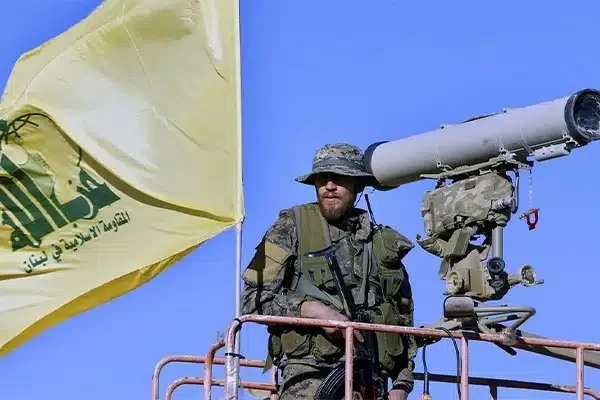
Hezbollah Disrupts the Calculations!
In his book, Cook asks why Israel and the United States expanded the “war on terror” to the strongest country in the Middle East, Iran? Because this country can reduce the crisis in Iraq? Why should the “clash of civilizations” turn into a Shia-Sunni conflict and risk escalating instability? Many Middle Eastern countries are now an undesirable mix of Sunni and Shia populations, as they were combined into states with artificial borders after World War I. In late 2006, civil conflicts destabilized Iraq and Lebanon, spread, and Washington and Tel Aviv added fuel to the fire.
By confronting Iran and Syria, the situation may worsen, but the White House’s argument is that this is preferable to the unified resistance targeting the occupation. Israel shares this view, and thus both were behind the summer 2006 Lebanon war. At the start of the conflict, their hope was to unite Christians and Sunnis against Hezbollah and repeat the sectarian civil war that devastated the country from 1975 to 1990. But instead, the entire nation united against Israel, and Hezbollah’s overall power and position increased; exactly the opposite of what Tel Aviv had planned.
Hamas’s Victory in Elections and Israel’s Reaction
The same strategy was implemented against Palestinians in the occupied territories but yielded no results. After Hamas’s election victory, Israel refused to recognize it, and the United States and the West joined in. All foreign aid to the occupied areas was cut off, economic sanctions and restrictions on goods delivery were imposed, and the legitimate government in Gaza was put under severe pressure. Intensified repression followed with repeated Israeli army invasions and attacks, with the idea of increasing internal conflicts in Gaza’s streets.
This process continued for months, then subsided when Hamas defeated Fatah. The group defeated Mahmoud Abbas’s militias, heavily armed by the US and Israel and led by Mohammed Dahlan. Despite this defeat, Israel achieved its long-term goal. The regime divided Palestinians into two rival camps in Gaza and the West Bank and declared and recognized Mahmoud Abbas’s unelected government as legitimate.
Israel’s Policy in Confronting Syria
Israel has a similar fate in mind for Syria, but according to Cook: “Decoding its closed society is more difficult.” Nevertheless, Congress passed the “Syria Accountability Act” in late 2003 to justify a future US or Israeli attack on any pretext, which is not hard to find. According to a provision in this law, if involvement is determined, the Syrian government “is responsible for any harm to US-led coalition forces, NATO, or any US citizen in Iraq,” even without needing to prove it. The Syrian government, despite clear evidence showing it has sought peace with the West and Israel, but it’s clear that whatever it does, it doesn’t matter to the Zionists. They will only leave them alone in exchange for resolving longstanding issues related to the Golan Heights and Syria’s surrender of the region.
Israeli America or American Israel?
Therefore, Cook asks: “Who controls US foreign policy? Does the dog wag its tail given Israel’s power to influence its domestic policy, or vice versa?” Some, including prominent figures like Noam Chomsky, while expressing the view that Washington has a coherent, predictable, and unified perspective on securing its interests abroad, believe Israel acts in line with US interests.
Nevertheless, how can the Iraq case be explained, as in that case, the US government rejected the advice of many key political advisors, plus its own big companies, and instead of a simple “regime change” that it had executed well in the past without war and occupation, proceeded to “completely overthrow the Iraqi government.” Moreover, attacking Iran would bring regional chaos, more instability, the potential overthrow of other regimes, increased conflicts with Iraq and targeting Americans, rising oil prices, potential global economic recession, and uncertainty about the desired outcome.
The Role of the Zionist Lobby in US Policies
Why, when Iran has sought dialogue for years, has Washington always rejected their requests? Here, Cook uses the opinions of two American thinkers and theorists named John Mearsheimer and Stephen Walt, and may have drawn from James Petras and his very important book “The Power of Israel in the United States.” This author has deeply examined Petras’s views and is greatly impressed by its convincing content. Petras’s book scrutinizes and introduces the depth and nature of the Zionist lobby at the highest levels of US government, in all branches of Congress, chambers of commerce, academia, clergy (especially powerful Christian fundamentalists), and mass media.
These lobbies pursue full and unconditional support for Israel’s interests, which in most cases date back several decades. Wars including the occupied territories, against Lebanon, the Gulf, Iraq, as well as all of Israel’s wars since 1967 and the prospect of its conflict with Iran and Syria despite strong opposition within US political space are among the cases they pursue.
Cook expresses his view as follows: “Both the dog and the tail wag each other,” and this is Israel’s strategy in creating dependency between the two countries to gain superiority, both in the Middle East region and outside it. He believes Israel has convinced neoconservatives in the US system that both countries have common goals. This strategy worked because it also placed US interests in achieving global dominance and controlling oil resources at its core.


From the Cold War to Securing Strategic Interests
In this regard, a long-term “special relationship” between the two countries dating back several decades must also be considered. The texts of private sessions of the US Senate Foreign Relations Committee before and after the 1967 war reveal it well. They explain early on that Washington assigns a special place to Israel as a strategic ally in an important part of the world. Beyond oil, the Johnson administration introduced Israel as a useful asset during the Cold War, at a time when Russia had close relations with the region’s Arab countries and was advancing.
Israel’s regional wars were also useful for countering the nationalist threat represented by Gamal Abdel Nasser in Egypt. They divided regional countries into irreconcilable camps and weak Gulf states like the Saudis needing US support, stronger regimes in Egypt, Jordan, and Shah’s Iran, and isolated governments like Syria, Libya, Iraq, and post-revolution Iran.
Sharon Doctrine and Seizing the Middle East Region
Cook discusses Ariel Sharon’s view on forming a Jewish empire as a regional superpower in a speech from the early 1980s that was never delivered. According to Cook, Sharon strongly deviated from Israel’s traditional strategy of seeking peace or direct confrontation with hostile neighbors. His new thinking was to expand Tel Aviv’s influence across the region by achieving decisive superiority in arms quality and technology. Sharon’s opinions, as a seasoned general, were respected by other Zionist leaders and greatly influenced young officers who later rose to fame, like Ehud Barak who became prime minister. He believed Israel must impose its policies on others and force other regional countries to comply, punishing them if they do not.
The “Sharon Doctrine” also reflected the views of Israel’s national security advisor, General Uzi Dayan, and Ephraim Halevy, then Mossad chief, in December 2001. They called September 11 a “Hanukkah miracle” because it gave Israel the opportunity to sideline and confront its enemies. From now on, all “Islamic” elements could be considered a threat to all regional rulers. In their view, confronting these threats is very important, so after Afghanistan and Iraq, confronting Iran and Syria “as soon as possible” ranked next. This view was also introduced by “Dick Cheney” under the title “lifelong war.”
Yinon Theory, More Radical Than Sharon
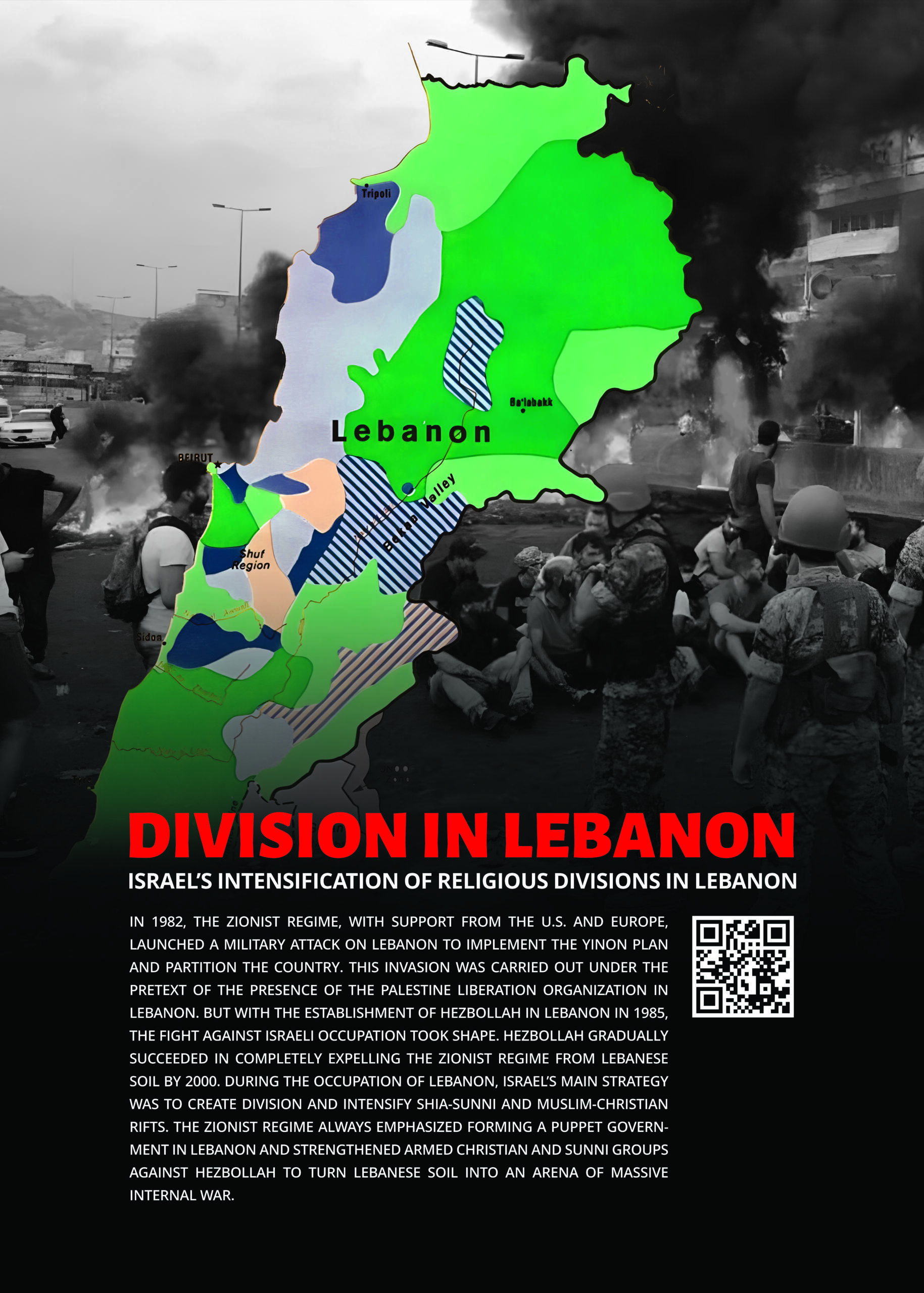
In 1982, Israeli journalist and former senior advisor to the Zionist regime’s Foreign Ministry, Oded Yinon, proposed a more radical theory. Like Sharon, he advocated turning Israel into a regional power plus a new goal: partitioning Arab countries into ethnic and religious groups that Israel could more easily control. Similar to Huntington’s “clash of civilizations,” Yinon suggested we have witnessed catastrophic events like the “collapse of the world order.” While identifying this threat, he states: “The power, size, precision, and quality of nuclear and non-nuclear weapons will destroy most of the world in the coming years.” He believed an era of chaos and conflict has emerged during which Israel is challenged by increasing Arab militancy.
His solution was installing minority leaders who, even after nominal independence, remain dependent on colonial powers.
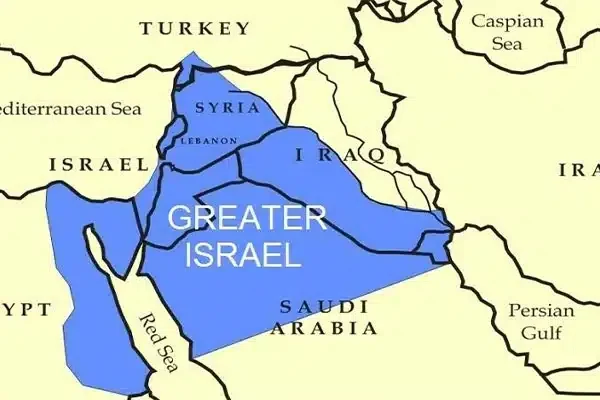
In Lebanon under Maronite leadership, in Syria under Alawite leadership, and in Jordan under Hashemite kings. Yinon believed these states are weak, and with this action, oil-rich countries can also be easily dissolved, and doing so is crucial for the forced relocation of Palestinians from their lands and inside Israel. Moreover, achieving dominance in dissolving and partitioning Arab countries depended on Israel being unchallenged and able to complete its ethnic cleansing process.
Remaking the Middle East with the Yinon Plan
After the Soviet Union’s dissolution, the Israeli army had to convince Washington that it could be useful in the post-Cold War world. Now, does this regime see its role as a bullying enforcer or a regional partner to secure US and Israeli interests and dominance through spreading disorder and instability? In the 1990s, two new types of political and paramilitary actors emerged in the Middle East: Sunni jihadis like Al-Qaeda and elements like the Taliban in Afghanistan and groups like Hezbollah in southern Lebanon. These groups represent major challenges that are not easily intimidated and do not back down.
In this new world, threats are at the sub-state level, so the Yinon plan was attractive from this perspective: encouraging discord and hostility among nations, destabilizing them, and partitioning them into small states. Tribes and sectarian elements can be pitted against each other and ally with non-Arab, non-Muslim groups like Christians, Kurds, and Druze.
However, one problem remains: the possibility that another Middle Eastern country produces nuclear weapons and challenges Israel’s dominance and surpasses it. Nevertheless, Israel has planned “organized chaos” across the region and convinced US neoconservatives that this plan is reasonable. They had no choice but to confirm; powerful internal opponents in rival countries, along with Israel itself, are destabilizing the region. Of course, there is no guaranteed outcome, and subsequent consequences are unpredictable, but they consider all possibilities. In their view, if everything goes according to plan, the Israeli government can destroy Iran and Syria and end their national republics. This is what other countries should fear.
Advantages of the Israeli and American Agenda
Cook explains why Israel and Washington chose this agenda despite its risks:
- By controlling Iran and Iraq, oil production can be increased and prices brought to the desired level.
- Israel’s economic and political rivals, plus Palestinians in their lands and inside Israel, will be paralyzed.
- Gulf countries, including Saudi Arabia, will be weakened.
- China can only be contained by controlling its main oil source; partitioning this country in a way similar to the Soviet Union’s collapse may become easier.
- As for Russia, it is the big, risky target with low chances of success. In a June 2007 speech by Putin that did not receive enough attention, he warned of the deterioration of US-Russia relations after September 11, pointing to Bush administration policies he considered threatening and dangerous to Russia’s security.
- US military bases encircle Russia.
- Former Soviet states have become NATO members.
- Offensive missiles have been deployed under the pretext of missile defense on Russia’s borders.
- Regimes allied with Russia in Central Asia were overthrown in favor of Washington.
- US-supported “pro-democracy” groups in Serbia, Ukraine, and Georgia are inciting political instability in Moscow.
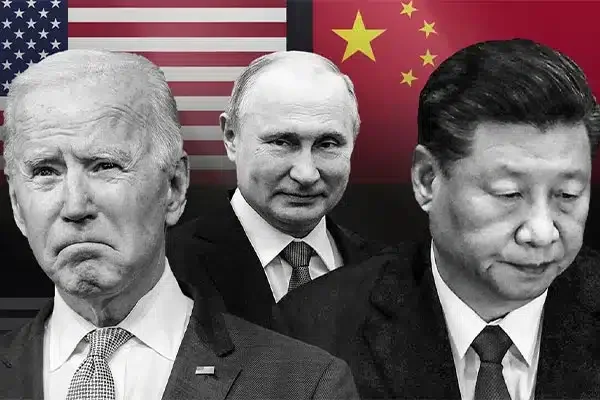
Two International Fronts Against Each Other
These actions convinced Russian hardliners that America is planning regime change and further fragmenting the Russian Federation. China has also realized this and knows it may be next. Both have the power to unite in regional and international organizations for self-defense and compete with the US for control of Central Asia’s vast reserves. Examples include the Asian Energy Security Network and, more importantly, the Shanghai Cooperation Organization (SCO). Political, diplomatic, economic, and security measures are also used as a counterweight to the aggressive US-dominated NATO. Other regional powers, including India, Iran, and even South Korea and Japan, may join one or both alliances, given that this great game in the new millennium is expanding.
On the other side, America and Israel use the occupied territories as a laboratory to examine their desired policies toward the entire region. In the 1967 war, Israel raised the idea of expelling Palestinians to Jordan because, in their view, “Jordan is also part of Palestine.” The only issue was how to do it. At the same time, Israel long intended to partition Arab countries into smaller hostile states, and in the early 1980s, Haaretz military reporter Zeev Schiff wrote that Israel’s important interests are served by “dissolving Iraq into several countries” and creating a Shia state, a Sunni state, and a separatist Kurdish state.
Since then, Israel has implemented this in the occupied territories by testing urban warfare tactics, new weapons, and various population control techniques. It examines whether these tactics are feasible or not, their benefits for the regime’s business and economy in terms of domestic feedback, and strengthens them.
Israel’s Strange Strategy in the Middle East
Israeli technology companies have always been pioneers in their homeland security industry and still dominate it, making the country the world’s top in technology and the fourth largest arms exporter after the United States (the largest), Russia, and France. The US Department of Homeland Security (DHS) is one of their biggest customers for advanced fences, unmanned drones, biometric IDs, video and audio surveillance equipment, airline passenger profiling, prisoner interrogation systems, thermal imaging systems, fiber optic security systems, tear gas products and ejector systems, and more.
With such capacities and lessons learned from within the occupied territories, Israelis believe they must abandon the old model of installing strong puppet leaders. This regime wants nothing even close to a “Palestinian dictatorship” that might promote Palestinian nationalism, challenge Israeli sovereignty, and disrupt settlement occupation plans. Continuing their actions depends on dividing Palestinians, keeping them weak, unable to resist, and easily expelling them from land that Israel wants to incorporate into Greater Israel, which also includes southern Lebanon.
Transformation of Israel’s Strategy Against Palestinian Leadership
After the 1967 war, Israel prevented the emergence of new Palestinian leaders and tried to manage the Palestinian population by collaborating with their leaders or eliminating those who might become obstacles. By 1981, Sharon (as defense minister) reformed this plan under the title “Village Leagues” using local “PLO” militias. However, when Palestinians rebelled against their leaders under this plan, the system was abandoned, and Israel tried other new approaches.
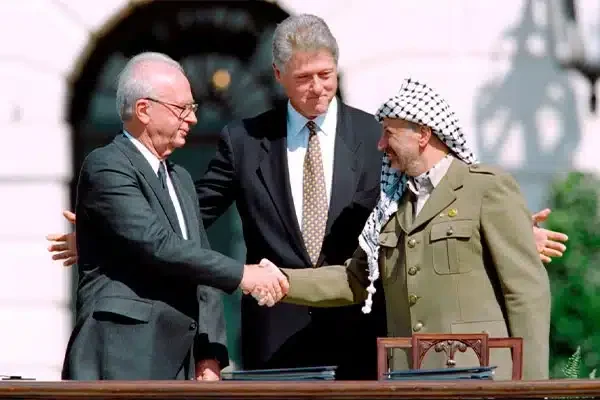
The most important was the Muslim Brotherhood (rooted in Egypt), which later became Hamas in the late 1980s. Israel at the time believed traditional Islamic elements were easier to manage than PLO nationalists and could later be taught other things, thus starting a completely new experiment under the Oslo process. This plan secretly weakened the PLO after the Gulf War, and while specifying no particular outcome for it, gave time to continue occupying Palestinian lands without granting any concessions. In this regard, Palestinians in turn abandoned armed struggle; they also recognized Israel’s right to exist. They agreed to leave major unresolved issues for final status negotiations, unspecified, and received nothing in return.
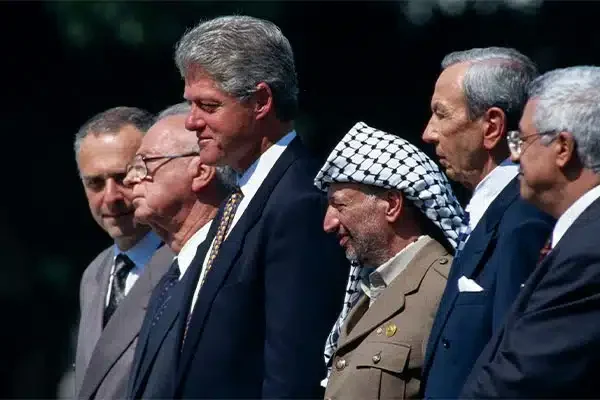
From Village Leagues to the Oslo Plan
Yasser Arafat and his associates got what they wanted: a free passport out of Tunisia, where they were in exile after the 1982 Lebanon war. They had to return home, take leadership of their people, and become enforcers of Israel’s orders. Interestingly, Cook points to a lesser-known fact. In fact, many high-ranking Israeli security officials opposed the Oslo plan. They believed it gave Arafat an “international platform” to promote Palestinian resistance, which might weaken Israel’s position.
It was no surprise that after Yitzhak Rabin’s death, the spirit of Oslo also died, Arafat was isolated, and spent much of the second intifada as a prisoner in Ramallah, dying in a Paris hospital in November 2004 after being poisoned by Zionists (and there is solid evidence for this claim). Meanwhile, Israel abandoned the Oslo plan and tried another new approach: dividing and segregating Gaza and West Bank areas to suppress organized resistance and dissolve Palestinian freedom-seeking, starting with checkpoints and curfews. Then it turned to forced separation, displacement, deliberate harassment, land seizures, home demolitions, bypass roads, and increased state-supported violence, thus pitting the world’s fourth most powerful army with its latest military equipment against unarmed civilians.
Divide-and-Rule Strategy Among Palestinian Groups
At the same time, Israel chose Mahmoud Abbas instead of the legitimate Hamas government. Its leaders stated they would recognize Israel only if Palestinians are also recognized in return, given an independent state within pre-1967 borders, or a specified country with defined borders for all Israeli citizens. Of course, Israel refused to accept this condition and continues expanding its settlements on confiscated lands.
Moreover, with Abbas’s Fatah movement (Palestinian Authority) in the West Bank and Hamas in Gaza, Israel continues increasing division and expanding their internal fights for better control. This strategy is to marginalize Palestinians, and Israel is confident that the plans it is now implementing in the occupied territories can be desirably applied across the Middle East.
This plan initially became the Bush administration’s strategy under the leadership of extreme neoconservatives led by Dick Cheney. They knew all along that invading and occupying Iraq would unleash sectarian violence “on an unprecedented scale.” Cook notes that this plan was derived from a 1996 “strategic report” titled “A Clean Break” written by key pro-war neoconservatives—David Wurmser, Richard Perle, and Douglas Feith.
Partition Using Religious and Ethnic Differences
They predicted that after Saddam’s fall, Iraq’s political sphere would be divided among military commanders, tribes, clans, sects, and key families; since Sunni leadership maintained internal unity only through state repression. Britain also knew this, and in May 2007, the US Senate Intelligence Committee warned in a report about existing intelligence documents on post-invasion chaos. Because Iraq is among Middle Eastern countries with the least cohesion and heavy competition among Sunnis, Shias, and Kurds.
Nevertheless, this situation perfectly matches the type of occupation Washington desires; it also justifies the “war on terror.” It prepares everything for Israel’s desired final solution, namely dividing the country into three smaller states: a Kurdish state in the north, Shias in the south, and Sunnis in the middle.
However, implementing it won’t be easy, as Iraq’s largest cities have mixed populations. That’s why the Pentagon intends to enclose neighborhoods with barricades and walls and issue special IDs for entry, in the style of what Israel applies in the occupied territories. Israel has the same plan for Lebanon; where Shias, despite their large population, are marginalized under the country’s “confessional” division system. Under this system, government positions are allocated based on religious lines, giving Christian and Sunni minorities a large share of power. But again, it is Hezbollah that, despite unresolved issues, challenges the pro-Western government in the country.
Washington’s Painting for Lebanon and Iran
After the 2006 war, Hezbollah grew stronger; Washington supported the Siniora government and promoted the “Cedar Revolution” like other color revolutions, including the “Orange” and “Rose” ones successfully designed and executed in Ukraine and Georgia. Assassinations and car bombings are part of this plan; they attribute these explosions to Syria without evidence. But the culprit is Mossad, which has a long history of engineering such violence in the region. Cook quotes former US counterterrorism expert Fred Burton: The technology used in recent Lebanon assassinations is only available to a few countries: the United States, Israel, Britain, France, and Russia.
The Pentagon and CIA have also been active in Iran for months in a plan called “black operations,” and it’s no secret why. Like Iraq, Lebanon, and Palestine, they hope to destabilize Iran’s government and system by creating ethnic tensions across the country, promoting unrest and conflict. And force the country to make a mistake that Washington can quickly use for its goals. A Pentagon insider told Seymour Hersh that their agents are working with Azeris in the north, Baluchis in the southeast, Kurds in the northeast, and their own special forces inside Iran. All actions are aimed at inciting and dividing internally, and Iran is aware of this fact.
Reevaluation of Colonial Strategies and the New Middle East
This is a new version of the old colonial “divide and rule” plan that has so far been ineffective, and Hezbollah leader Sayyed Hassan Nasrallah is aware of the details. He says Israel and Washington want to partition Iraq, Iran, Lebanon, and Syria. If he is right, which he probably is, it means that in this theory, the method used by colonial powers after World War I to stabilize their governments has changed, and Cook challenges this issue. He believes the functioning of this plan is improbable and somewhat fanciful; although it succeeded in Yugoslavia, the Arab world is different.
He ends his book by noting that a generation of policymakers in Washington have been captive to the idea that they can remake the Middle East with “spreading instability and social conflicts” according to their goals. Instead, Cook concludes that a new form of political, religious, and social alliances is forming across the region. If Washington pursues its “war on terror” goals, it will ultimately be trapped in a cycle of “endless war” without achieving any victory.
تحمیل شروط عجیب به مردم فلسطین در قبال دادن حقوق طبیعی یک انسان به آنها…



No comment