 Arabic
 Persian
 English

Violation of Ceasefire
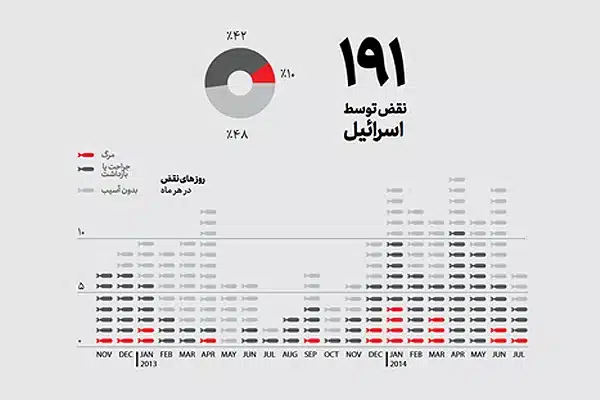
The Israeli government has violated the ceasefire it itself committed to. In November 2012, the Israeli government and Palestinian groups in Gaza, with Egypt’s mediation, signed a ceasefire agreement under which both sides were to halt hostilities, and the Israeli regime was to lift restrictions on the Gaza Strip. However, the Zionist regime violated the ceasefire 191 times, with 10 percent of these violations resulting in Palestinian deaths and 42 percent leading to injuries or arrests.1
Violence by Illegal Settlers Against Citizens
“Settlers attacked us at night. They stole the sheep and carried weapons. They chased my children. […] Now, every time we hear a car, we get scared.” This is the bitter account of a Palestinian woman from Al-Mughayyir, testifying that Zionists, in addition to occupying Palestinian land, perpetrate numerous acts of violence against Palestinians. For example, in 2017, Israeli settlers attacked Palestinians in the West Bank an average of 10 times per week, with 3 attacks resulting in casualties or property damage and 7 involving harassment, intimidation, or unauthorized entry into homes. During these acts of violence, 2 people were injured, 114 trees were damaged, 1 livestock was stolen, killed, or wounded, and 2 vehicles were damaged.


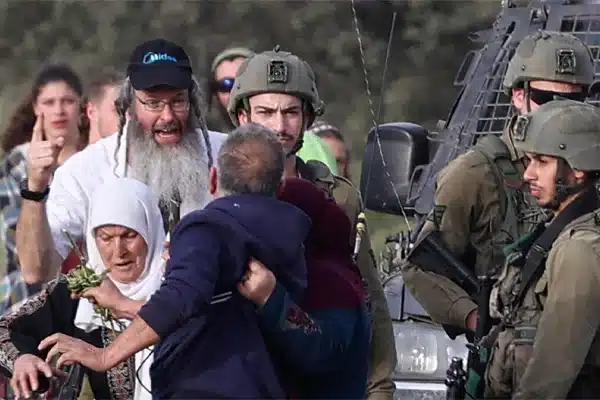
were damaged, 1 livestock was stolen, killed, or wounded, and 2 vehicles were damaged.
Additionally, in 2022, Zionists attacked the area an average of 30 times per week, with 16 attacks resulting in casualties or property damage and 14 involving harassment, intimidation, or unauthorized entry into homes. During these acts of violence, 46 people were injured, 241 trees were damaged, 6 livestock were stolen, killed, or wounded, and 14 vehicles were damaged.
Between 2017 and 2022, violence by Israeli settlers against Palestinians increased by 96 percent, such that in these incidents, 13 Palestinians were killed by Israelis! The level of settler violence in 2022 amounted to 1,571 attacks, including casualties, property damage, harassment, intimidation, and unauthorized entry into homes, and it increases every year
Revocation of Residency for Palestine’s Original Owners
Although revocation of residency, according to the Rome Statute of the International Criminal Court and the Fourth Geneva Convention, leads to forced transfer and is considered a war crime, the Israeli regime has not yet abandoned this widespread and systematic policy for transferring the Palestinian population. When this regime occupied East Jerusalem (in 1967), it imposed “permanent residency” status on Palestinians in the city—the same permit a government issues for long-term presence of a foreign individual in the destination country! Through this, the Israeli regime has been able to make Palestinians vulnerable in political and demographic spheres, making it easier to achieve its goal of Judaizing Jerusalem.
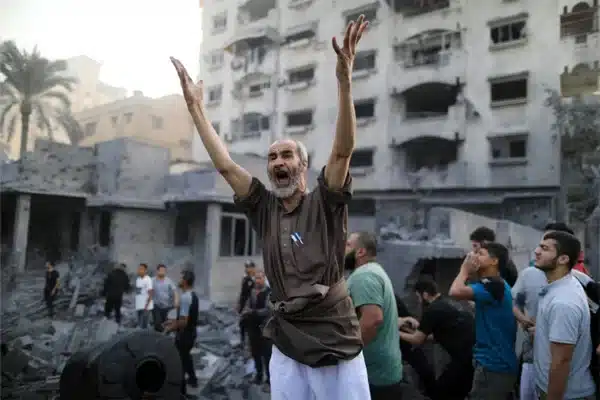
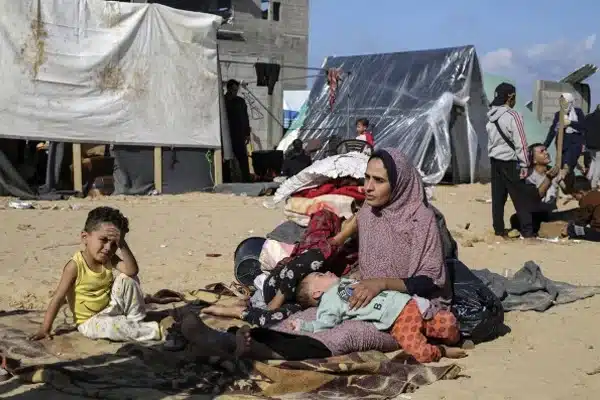
Since occupying East Jerusalem, this regime has revoked the residency of over 14,500 Palestinians (including 86,000 dependent children) in the city and has increased the use of this policy as a punitive measure since 2006. The Zionist regime has used three violative and illegal criteria at different times to force Palestinians to transfer and leave Jerusalem:
1) From 1967 to 1994, the regime revoked the residency of Palestinians who lived outside Palestine for 7 years or had become permanent residents or citizens of another country. Through this criterion, Israel revoked the residency of 3,078 Palestinians in Jerusalem..
2) Additionally, from 1995 to 2016, the regime revoked the residency of Palestinians who could not prove that the center of their life was in Jerusalem.
3) Finally, from 2006 to 2016, the regime revoked the residency of Palestinians accused of breaching allegiance to Israel. This is despite international humanitarian law explicitly prohibiting an occupier from demanding loyalty from people whose land is occupied.
Using these three criteria, the Zionist regime has revoked the residency of a total of 11,582 Palestinians between 1967 and 2016.2
Plundering Palestine’s Mines
One of the lesser-seen examples of injustice against the Palestinian people is the plundering of this country’s mines by the Israeli regime—mines whose extracted materials are used in various industrial, agricultural, and military fields. Some of these mines are located in the Dead Sea (Al-Bahr al-Mayyit) and its shores, from which bromine, potash, and magnesium are extracted—resources used in chemical fertilizers, cosmetics, and military applications. However, the mineral resources from the part of the Dead Sea in occupied Palestinian territories are plundered by the Israel Chemicals company, one of the world’s top ten chemical fertilizer companies, for military and commercial purposes. This company has exclusive rights to mine the Dead Sea, and it is predicted that this permit will be extended until March 31, 2030. The golden shares of this company belong to the Israeli regime, granting it veto rights and the ability to nullify other shareholders’ votes. The Israeli plundering of the Dead Sea and Palestinians’ lack of access to their territorial mines in this area cause an annual loss of $918 million to the Palestinian economy.3

U.S. Veto Power, Israel’s Greatest Supporter in the UN
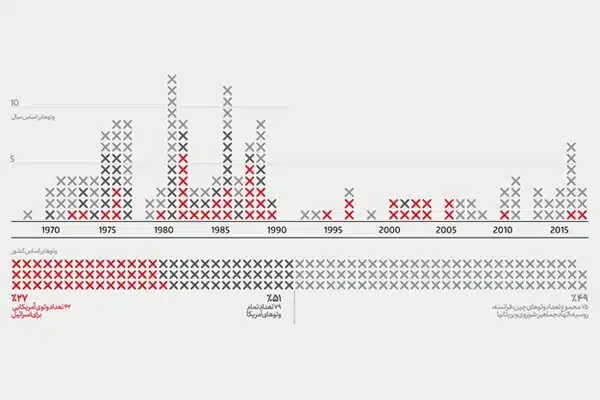
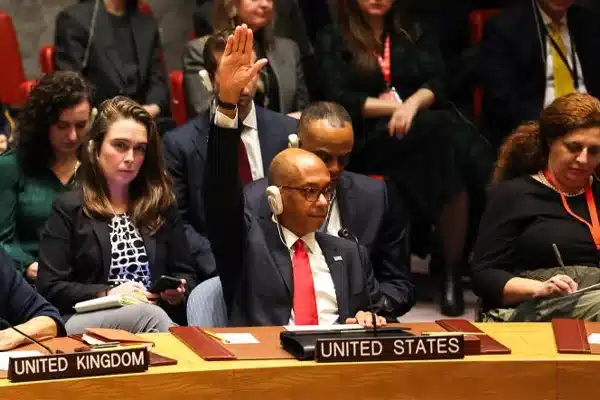
One of the UN member states with veto power is the United States of America. Veto power allows permanent members of the UN Security Council to nullify resolutions enacted to protect international laws and conventions based on their own national interests. The other permanent members of the UN Security Council with veto power are China, France, the United Kingdom, Russia (and formerly the Soviet Union). However, between 1970 and 2015, the U.S. used its veto power more than all these countries combined, accounting for 51 percent of all vetoes (79 cases), with the remaining 75 cases belonging to the aforementioned countries. Interestingly, 42 of the United States’ vetoes (over 50 percent of U.S. vetoes and 27 percent of all vetoes in the UN Security Council) were in favor of the Israeli regime.4

Hunger Strike
One of the methods of struggle for Palestinians imprisoned in Israeli regime prisons is the hunger strike. Palestinian hunger strikers undertake this action, which has dangerous consequences for their health and lives, to protest the injustice and human rights violations by Zionists. Below, the physical consequences of a hunger strike on various days and the status of notable strikers at different stages are mentioned:
- Day 1: On the first day, the striker feels hunger and stomach cramps, which disappear after the second to third day.
- Day 7: The hunger strike of Nelson Mandela and other prisoners ended after seven days.
- Day 14: 14 days after starting the strike, the body begins breaking down muscle tissue for survival, which is the most severe form of malnutrition (catabolism).
- Day 15: On day 15 of the strike, the striker loses the sense of thirst and feels lightheaded or, conversely, mental sluggishness. The striker feels cold between days 15 to 18 of the strike.
- Day 18: On this day, standing may become difficult to impossible for the striker.
- Day 21: Mahatma Gandhi ended his longest hunger strike after 21 days.
- Day 22: Laila Soueif ended her strike for her son Alaa after 22 days.
- Day 26: Over 200 Guantanamo prisoners were forced to end their strike after 26 days.
- Day 27: 33 South African prisoners ended their strike after 27 days.
- Day 35: After 35 days, the striker loses 18 percent of body weight and experiences severe dizziness and involuntary vomiting. Double vision and rapid, involuntary eye movements also occur.
- Day 42: Apathy toward surroundings, disjointed speech, loss or difficulty in concentration, hearing loss, and possible blindness are consequences that affect the striker after 42 days.
- Day 45: From this day onward, death can occur at any time due to heart failure, known as “cardiovascular collapse.”
- Day 66: Bobby Sands, a member of the Provisional Irish Republican Army, died after 66 days of hunger strike while imprisoned.
- Day 87: Khader Adnan, a Palestinian activist imprisoned in Zionist regime prisons, went on a hunger strike for nearly three months in protest of his detention without charges or trial and died as a result.
Although some view hunger strikes as a form of suicide, the strikers see this method as a way to fight for their goals; as protesters gathered in Tiananmen Square in China in June 1989 stated in their hunger strike declaration: “We are not seeking death; we are seeking a real life.”⁵


Israeli Violence in Palestine
One of the noteworthy issues in the Palestinian matter is how Palestinians cope with grief. Below, the grieving and mourning experience of New York City residents during the September 11 incident is compared with that of Gaza’s people: The people of New York City went through five stages of grief to overcome the loss of loved ones in the September 11 incident (2,823 killed):
“The Cycle of Israeli Violence in Palestine”
1) Denial: Friends and family of the victims distributed about 90,000 missing persons posters across New York in 2001.
2) Anger: In 2001 and 2003, 90 percent of Americans supported the attack on Afghanistan, and 59 percent supported the attack on Iraq.
3) Bargaining: The U.S. government paid an average of $2.1 million in compensation to each victim’s family in 2003.
4) Depression: Many of the 10,000 people suffering from post-traumatic stress had not recovered after a decade (at least until 2011)..
5) Acceptance of Loss: U.S. President Obama dedicated the 9/11 Memorial and Museum in 2014 as “a sacred place of healing and hope.”
While American mourners were able to go through the stages of grief and ultimately accept the loss of their loved ones, the people of Gaza are trapped in a cycle of violence due to the Zionists’ repeated wars against them, with stages as follows:
1) Israeli Regime’s Withdrawal from the Gaza Strip: The Zionist regime of Israel withdrew from Gaza in 2005 but continued to control its borders, airspace, and coastal waters, depriving Palestinians of various rights, including movement and trade.
2) 33-Day War by the Israeli Regime Against Gaza (Operation Summer Rains): Palestinians in Gaza and the West Bank became angry over the corruption of the Palestinian Authority (Fatah) and the intensification of Zionist regime restrictions, electing a Hamas government in 2006. At this time, the Zionists’ war against Gaza began, lasting 33 days.
3) Gaza War (Operation Cast Lead): From 2008 to 2009, various efforts started in 2006 to negotiate a unified government between Hamas and Fatah failed due to Israeli regime interference and international interventions. In these years, the occupying regime of Jerusalem launched another war against Gaza.
4) 8-Day Gaza War (Operation Pillar of Defense): In 2012, the Israeli regime fueled another war against Gaza. With the start of this war, 40 percent of Gaza’s children suffered from depression, and 69 percent exhibited post-traumatic stress symptoms, indicating a new generation growing up with psychological damage.
5) Operation Protective Edge: In this 2014 operation, over 2,847 Palestinian civilians were killed, including over 1,242 children.
This violence continues to this day; thus, the Palestinian people are trapped in a repetitive cycle of grief, their pain does not heal, but they cannot accept the continuation of the Israeli regime’s violence and blockade either.6


Conditions of Palestinian Detention by Israel
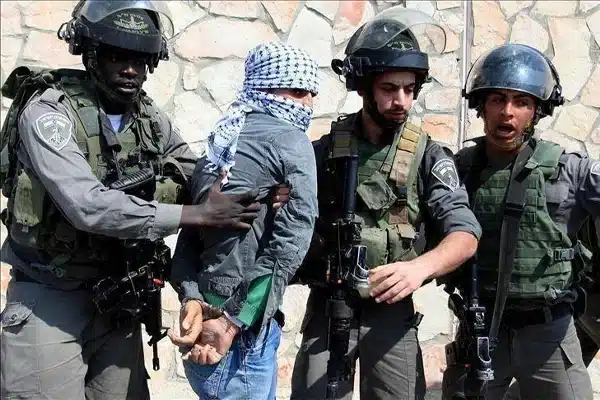
Answer: You can’t find out your charge! The Israeli regime holds most detainees based on secret evidence, so they have no way to know what they are accused of!
Answer: No! The Israeli regime can deprive individuals of the right to a lawyer for up to 90 days. Even if they have a lawyer, the lawyer cannot access the secret evidence.
How long will the defendant be detained?
Answer: It’s unclear! Temporary detention orders last up to 6 months, but Israelis can extend them as many times as they want..
Answer: It’s impossible! The Israeli regime often holds Palestinians arrested from occupied territories in prisons inside occupied areas, which is illegal under international law. Therefore, families must obtain special permits for visits, which Israeli authorities may deny without reason.
What help does the Red Cross provide to the detained defendant?
Answer: The Red Cross can visit you, but generally, it does not publish information about your conditions to the public.
Answer: Prepare for childbirth in prison! Some women have been forced to give birth in Israeli regime prisons, where medical negligence is common and systematic.
Answer: The Israeli regime disregards these constraints and routinely holds Palestinian political leaders in temporary detention.
How is solitary confinement possible for sick individuals?
Answer: You must endure it! The duration of Palestinian solitary confinement is approved by Israeli doctors. Physicians for Human Rights (PHR) condemns this action by Israeli doctors as complicity in human rights violations.
مدتیه که بایدن برای رسیدگی به بحران بدهی وامهای دانشجویی تحتفشار فزایندهای قرار داره…
Resources
Forensic Science International, 2004. Deaths due to hunger strike: post-mortem findings. 146(1), pp.35–38 (accessed on February 2012)
The Journal of the Medical Association, 2007.Hunger Strikes, Force-feeding, and Physicians’ Responsibilities.298(5), pp.563–566 (accessed on February 2012)
British Medical Journal, 1997. Hunger Strikes: Understanding the underlying physiology will help doctors provide proper advice. 315, pp 829–830 (accessed on February 2012)




No comment