 Arabic
 Persian
 English


Creating a Model for Fragmenting the Middle East Along Ethnic and Religious Lines
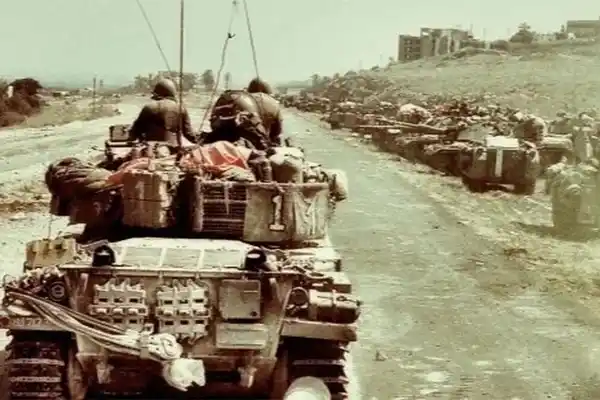
The focal point of the multifaceted conflict in late 20th-century Lebanon was Israel’s 1982 military invasion. This was not merely a military action to eliminate the Palestine Liberation Organization (PLO) but a calculated strategy within a broader vision for the Middle East envisioned by Israeli ideologues.
Violence by Illegal Settlers Against Civilians
“Settlers attacked us at night. They stole our sheep and carried weapons. They chased my children. […] Now, every time we hear a car, we’re scared.” This is the harrowing account of a Palestinian woman from Al-Mughayyir, testifying to the violence perpetrated by Zionists beyond occupying Palestinian land. In 2017, Israeli settlers in the West Bank attacked Palestinians an average of 10 times weekly, with 3 attacks causing casualties or property damage and 7 involving harassment, intimidation, or trespassing. These attacks injured 2 people, damaged 114 trees, stole or killed 1 livestock, and damaged 2 vehicles.
Historical Context: Invasion
In 1982, Lebanon was mired in a draining civil war that began in 1975, fragmenting society along ethnic-religious lines, primarily between Muslim and Christian groups vying for power. Amid this chaos, the PLO established a significant presence in Lebanon, using it as a base for operations against Israel. Tensions were exacerbated by geopolitical forces, including U.S. and European interests often aligned with Israel’s. The invasion, justified as eliminating the PLO for cross-border attacks, had a deeper strategic goal: reshaping Lebanon to serve Israel’s interests, rooted in Oded Yinon’s 1982 plan advocating the fragmentation of Arab states along ethnic-religious lines to weaken opposition to Israel.
Partition Strategy: Invasion Dynamics
After the invasion began, Israeli forces swiftly advanced from southern Lebanon to Beirut. Israel’s initial strategy was to deepen existing ethnic and religious divides in Lebanese society, empowering Christian militias and pitting them against Muslim groups, particularly Hezbollah, which emerged as a resistance group in response to the invasion. The primary goal was to create a “Christian puppet state” to make Lebanon a bulwark for Israeli interests and a barrier to Palestinian nationalism, supported by military and financial aid to Christian and Sunni armed groups. Israel aimed to escalate sectarian tensions into a full-scale civil war to further fracture Lebanon.
Israel’s efforts to destabilize Lebanon to establish a Maronite-dominated dependent state took various forms, from extending the Camp David formula to Lebanon to the 1982 full-scale invasion. On May 7, 1979, Menachem Begin addressed the Israeli parliament, inviting Lebanon to negotiate with Israel, proposing Syria’s withdrawal and the expulsion of Palestinians. This elicited an enthusiastic response from Bashir Gemayel, commander of the Lebanese Phalangist forces, Israel’s preferred candidate for a Christian puppet state. On May 28, 1979, he said: “These principles are sound and must be accepted as the basis for any Lebanese effort to find a solution. […] President Sadat accepted a similar proposal and is now leading Egypt to an era of prosperity. When will Lebanon be allowed to pursue its own prosperity?”
The 1982 invasion disrupted Lebanon’s internal balance in favor of Israel’s Lebanese allies, placing the Muslim majority, nationalists, and anti-Israeli groups in a submissive position. The victor dictated terms to the vanquished. Israel’s new ally, Bashir Gemayel, was set to become Lebanon’s president/viceroy, though, as journalist Jonathan Randal noted, Gemayel, whose presidency was owed to Begin and Sharon, complained they treated him like a “servant.” The Schultz Agreement of May 17, 1983, was intended to be Lebanon’s Versailles, realizing a long-standing Zionist dream: a “Christian” state allied with Israel.
Hezbollah: Rise of Resistance
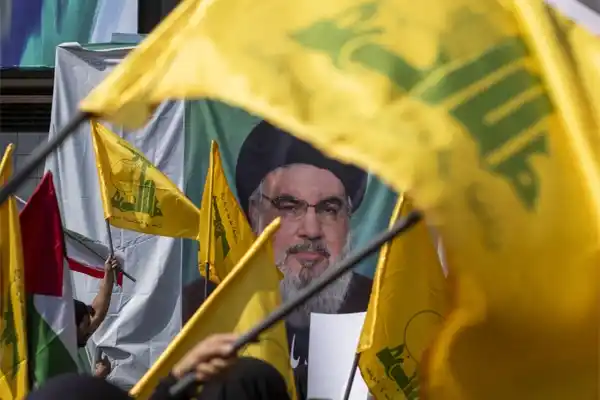
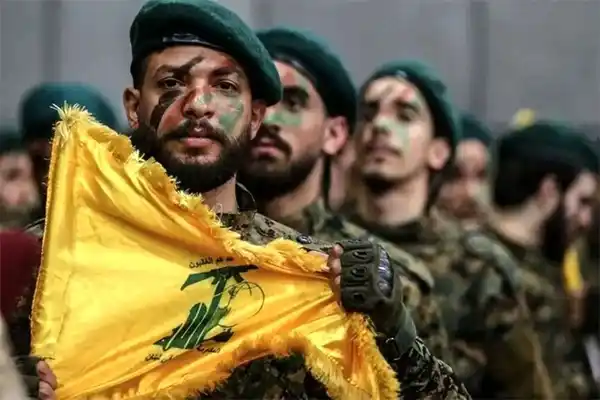
Amid this orchestrated chaos, Hezbollah formed in 1985 in response to Israel’s occupation and atrocities against Lebanese civilians. Unlike the fragmented factions Israel fostered, Hezbollah sought to unite Lebanese Muslims across sectarian lines to resist Israeli aggression. Their strategy focused on grassroots mobilization and building a viable political identity appealing to a broad base seeking national sovereignty and resistance to foreign occupation. Through the late 1980s and 1990s, Hezbollah gained significant strength, positioning itself as the primary resistance force against Israel. Despite the Israeli Defense Forces’ military might, Hezbollah’s guerrilla tactics, local terrain knowledge, and deep community support gradually undermined Israel’s position, leading to its withdrawal from Lebanon in May 2000. This marked a shift in dynamics, with Hezbollah emerging not just as a fighter but as a legitimate resistance movement in Lebanon.



No comment