 Arabic
 Persian
 English

Children in the Fire of Savage Wars
Gaza witnessed four Israeli wars against itself between 2007 and 2021. This grim reality means that children aged 14 and under (who comprised 41% of Gaza’s 2 million population in 2021) have spent their lives in bloody wars, endured the entire duration under Israeli blockade and unending harsh conditions, and experienced various psychological traumas. Some of these grueling conditions include:
- Water crisis: 97% of Gaza’s freshwater is contaminated. Lack of access to safe drinking water is a primary cause of illness and child mortality in Gaza.
- Extreme poverty: 64% of Palestinian children under 5 have experienced poverty, and 69% have faced food insecurity. Additionally, 35% of these children are at risk of not realizing their potential due to multiple psychological traumas.
- Inadequate education: Two-thirds of Gaza’s schools operate in two shifts due to classroom shortages.
- Psychological trauma: At least 88% of Gaza children in one study have experienced psychological trauma.
The continuation of the tragic life of 14-year-old Gaza children under the horrific shadow of 4 wars is narrated as follows:
Birth (2007): I am one of the over 70% of Palestinians born in Gaza, whose families were displaced after the Nakba in 1948 (formation of the Israeli state and expulsion of Palestinians) and took refuge outside their homeland. In the year I was born, the Israeli regime imposed a blockade on Gaza via land, air, and sea, intensifying previous restrictions.
Age 2 (First War; December 2008 to January 2009): I survived the 22-day Israeli attack on Gaza, in which Israeli forces killed 1,385 Palestinians, including 318 children.
Age 5 (Second War; November 2012): I survived the eight-day Zionist attack on Gaza, where Israeli forces killed 168 Palestinians, including 33 children.
Age 7 (Third War; July 2014): I survived the 50-day Israeli attack on Gaza, but Israeli forces killed 2,251 Palestinians, including 556 children, and orphaned over 1,500 children!
Age 11 (Great March of Return; March 2018 to December 2019): For two years, I witnessed mass Palestinian protests against the blockade. During these marches known as the “Return,” Israeli forces killed 214 protesters, including 46 children, and injured 8,800 children with live ammunition, rubber bullets, and tear gas.
Age 14 (Fourth War; May 2021): I survived an 11-day attack where Israeli forces killed 230 Palestinians. Of the 67 children killed, 12 were in a recovery program for psychological trauma from the previous war, but the Israeli regime denied them full recovery!!! This insane bloodshed is the reality narrated by Samah Jabr, head of the Mental Health Unit at the Palestinian Ministry of Health: "In Gaza, there’s no such thing as post-traumatic stress; because the trauma is repetitive, continuous, and ongoing!"1
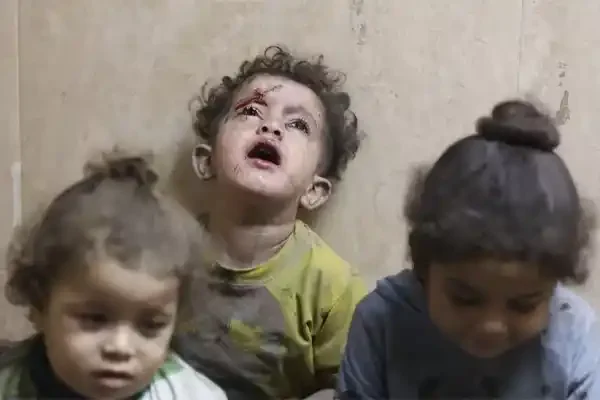
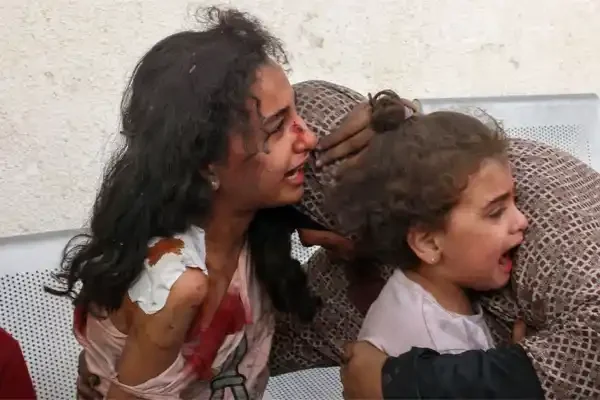
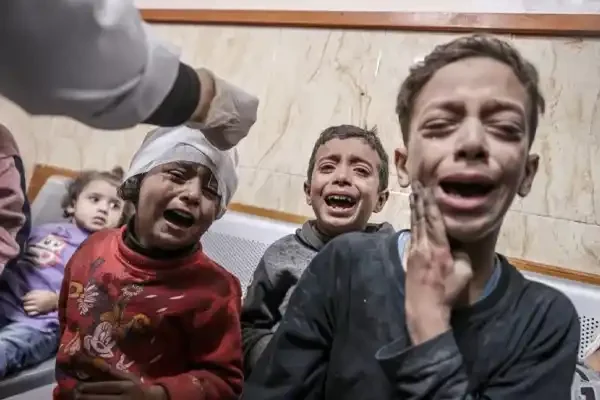
With these events, Gaza children are exposed to a triple form of psychological trauma. Water crisis, extreme poverty, deprivation of education rights, blockade, and unpleasant psychological experiences lead to chronic psychological trauma for these children, stemming from prolonged and pervasive distressing events. Additionally, refugee status and war experiences from birth cause intergenerational psychological trauma for some Gaza children whose parents endured and survived war traumas. Moreover, the occurrence of four wars places Gaza children at risk of acute psychological trauma, resulting from enduring particularly distressing specific events.1
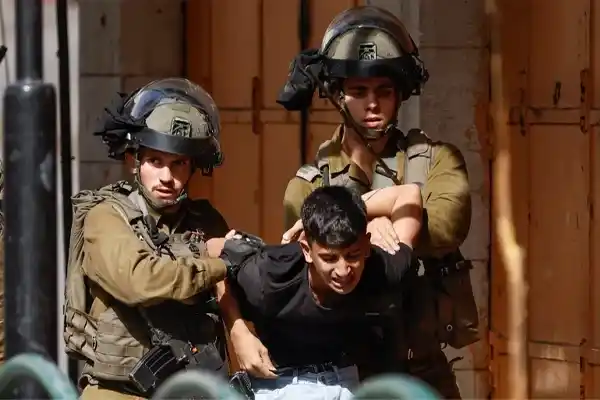
Illegal Detention of Children
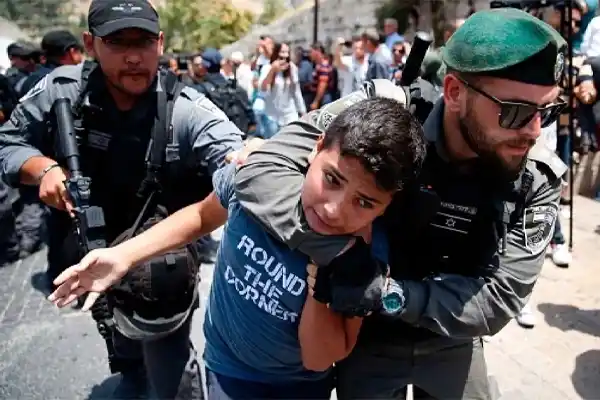
The Israeli regime shows no mercy even to children in detaining Palestinians, such that between 2000 and 2018, over 8,000 Palestinian children were arrested and prosecuted in Israeli military courts. However, this Zionist brutality has never subdued the detained Palestinian children; rather, they continue resisting like their parents, as Ahed Tamimi, a 16-year-old Palestinian girl arrested by Israelis and who spent 8 months in their prisons, said:
“We must expand our struggles to each other to end all injustices in the world. […] I encourage those under oppression to continue their resistance.”2
Return to School
One of the heavy blows inflicted on Palestinian children during the Israeli regime’s occupations is their deprivation from attending school and dropping out of education. The displacement of Palestinian refugees and their homelessness has had a destructive impact on their children’s continued education. 235,650 Palestinian refugees inside Syria, 1,600 in Turkey, 45,000 in Lebanon, 1,000 in Gaza, 6,000 in Egypt, and 8,000 in Jordan have been displaced (the number of displaced Palestinian refugees in occupied areas and the West Bank is zero). The issue of displacement’s impact on education has become an emergency for Palestinian refugee children in Syria, such that two-thirds of Palestinian refugee children in Syria have dropped out of school due to the closure of UNRWA schools. There are 118 such schools in Syria, of which by 2012, 68 were closed due to damage or insecurity, 10 were designated as emergency shelters for displaced persons, and only 40 remained open for Palestinian children’s education. Palestinian children dropping out in Syria go to Lebanon and Jordan and UNRWA schools there, such that by June 2013, 35% of Palestinian refugee children who moved from Syria to Lebanon were enrolled in UNRWA schools. Additionally, their number in Jordan doubled from the 2012 to 2013 academic year.3
Birth at Checkpoints
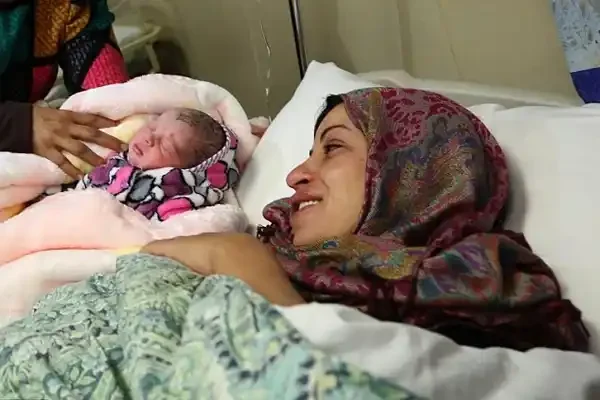
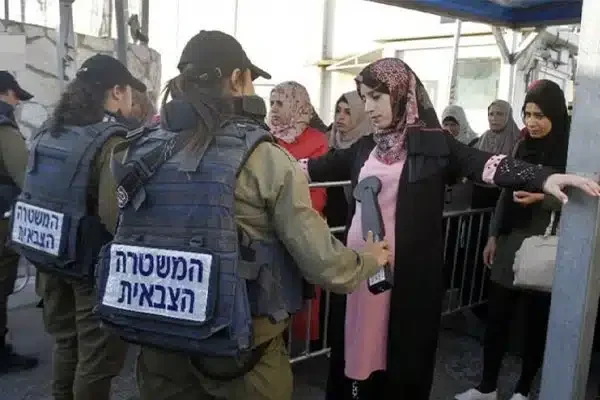
One of the overt injustices by Zionists on Palestinian children and their mothers is the unsuitable birth conditions, such that between 2000 and 2005, 67 Palestinian mothers were forced to give birth at Israeli military checkpoints, resulting in 36 infant deaths. Since 2005, there has been no regular monitoring of Palestinian births at checkpoints. However, more cases have been reported in subsequent years, including those in 2008 and 2009 referenced by the UN Human Rights Council. Therefore, now, many Palestinian women in remote areas resort to home births or move to relatives’ homes near hospitals weeks before delivery. Although the UN has supported midwife training to assist some of these women, this has failed due to Israeli restrictions on Palestinian movement; for example, by June 2012, there were 542 barriers to Palestinian movement in the West Bank, including 61 permanent military checkpoints, making hospital access impossible for many West Bank Palestinians without passing Israeli checkpoints.4
Illegal Imprisonment of Children
The occupying regime of Jerusalem has no qualms about imprisoning Palestinians, even their children, such that by the end of 2017, 350 Palestinian children were imprisoned in Israeli regime prisons.5
Separation of Children from Families
Another Israeli crime is separating Palestinian children from their parents. According to Israeli regime regulations, Palestinian children are allowed to exit Gaza, but parents are not permitted to do so. Under this unjust rule, 1,821 Palestinian children received exit permits without parents. Additionally, for 59% of sick children who requested exit permits from the Israeli regime for treatment, permits were issued without parents.6
یکی از هزاران خسارتی که اسرائیل به غزه وارد کرده در حوزه محیط زیست و اقتصاد این کشوره…
Resources
24,000 out of 67,000 Palestine refugee children attending UNRWA schools in Syria in the first half of 2013.Data on displacement of Palestine refugees from Syria provided by UNRWA as of 7 September 2013.
PA Ministry of Health, 2006. Annual Report 2005 (accessed on 18 January 2012)
UNHRC, 2009. The issue of Palestinian pregnant women giving birth at Israeli checkpoints: Report of the High Commissioner for Human Right (accessed on 18 January 2012)
UNHRC, 2010.The issue of Palestinian pregnant women giving birth at Israeli checkpoints: Report of the High Commissioner for Human Rights (accessed on 18 January 2012)
UNFPA, 2007. Checkpoints Compound the Risks of Childbirth for Palestinian Women (accessed 2 January 2013)


No comment