 Arabic
 Persian
 English

Unveiling the New Middle East at the United Nations
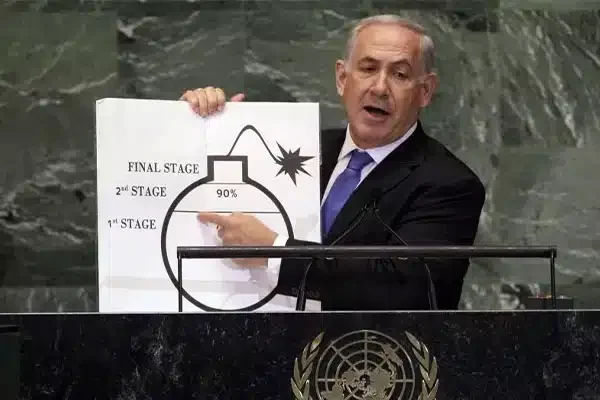
In late September 2023, Benjamin Netanyahu, Israel’s Prime Minister, addressed the United Nations General Assembly. The scene felt familiar to veteran politicians who remembered his previous speeches in New York, especially his infamous 2012 performance when he drew a red line around a cartoon bomb to express his fear of Iran’s nuclear enrichment program.
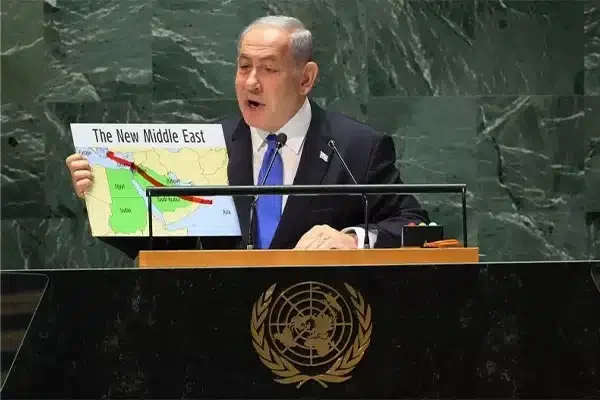
This time, Netanyahu used a different image for his performance, presenting a map titled “The New Middle East,” with parts of the region colored green. The map included all territories under Israeli occupation from the Jordan River to the Mediterranean Sea, with no indication of Palestinian land, alongside other countries like Egypt, Saudi Arabia, Bahrain, and the United Arab Emirates. These are Arab countries that have either already normalized relations with Israel or, like Saudi Arabia, are in negotiations to establish formal ties with the Jewish state. During this display, Netanyahu pulled out his red marker and drew a diagonal line from Dubai along the Persian Gulf to Israel and finally to southern European ports. He announced the emergence of a fictitious route called the “Corridor of Progress,” placing these Arab countries and Israel at the heart of a new global trade axis connecting Asia to Europe.
Netanyahu stated: « “A few years ago, I stood here with a red marker to show the disaster, the great calamity, and the problem of a nuclear Iran. But today, I use this pen to show a great blessing. The blessing of the New Middle East, between Israel, Saudi Arabia, and other neighbors.”».
Strategic Shift in Arab-Israeli Relations
Although Netanyahu’s performance in using this platform for global visibility may seem unique, he was profoundly alone in presenting the “ New Middle East.” Before the sudden outbreak of war between Israel and the Palestinian militant group Hamas based in Gaza, many analysts had noted the ongoing fundamental geopolitical shifts in the region. The Abraham Accords, U.S.-backed agreements between Israel and a group of predominantly Arab monarchies in the region, signaled a political willingness to move away from old paradigms that defined the tense situation in the Middle East. The reestablishment of cordial relations between Saudi Arabia and Iran, partly mediated by China, somewhat reduced tensions in one of the region’s most volatile rivalries. This highlighted another reality: while the U.S. explicitly sought to extricate itself from the region’s quagmires, other global powers increasingly took on roles in the current “ multipolar” world.
The repositioning of the U.S. was just one factor in the ongoing transformations. Others included the exhaustion of the Arab Spring movement, which encompassed Islamist and pro-democracy political movements that, after a decade of conflict, instability, and counter-revolutionary actions, faded away. In fact, reactionary Arab states like the UAE and Saudi
Normalization of Saudi-Israeli Relations: The Start of New Developments
Over the past months, the Biden administration placed many of its regional bets on normalizing Saudi-Israeli relations. A deal was not imminent, but the White House was confident about its strategic depth and scope, believing it would mark a turning point in regional relations. Even if Israel officially has the strongest geopolitical Arab country by its side and enjoys significant U.S. security guarantees, closer ties with Saudi Arabia could create a deterrent axis against Iran, allowing Washington to better focus on its competition with China and the Ukraine war challenge.
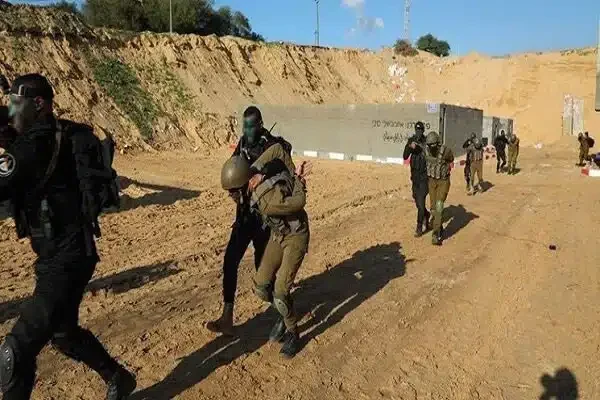
However, it seems the “Old Middle East” cannot be buried. Hamas’s severe and deadly attacks on October 7 from southern Israel were followed by Israel’s relentless and ongoing assault, during which at least 2,670 Palestinians in Gaza were killed and over 600,000 displaced within days. Since then, the country has witnessed a wave of support for the Palestinian cause across the Arab world and in more distant Islamic countries.
The Future of the Middle East According to Experts
Steven Cook expresses his view in Foreign Policy: “The starting point of the New Middle East will be Israel’s reoccupation of the Gaza Strip, not the opening of an Israeli embassy in Riyadh.” Netanyahu’s hope of sidelining Palestinians in a broader regional vision seems more naive than ever, especially as Israel’s neighbors see the escalating violence as evidence of the root cause behind the lack of a process to grant Palestinians a state or equal political rights.
Murat Yeşiltaş states in the Turkish newspaper Daily Sabah: “The events of October 7 have temporarily closed the door on the New Middle East plan, and reopening it depends on the path Israel chooses regarding the Palestinian issue.”
Merav Rapoport writes in the leftist Arabic-language publication Local Call: “Hamas has declared in the clearest, most painful, and deadliest way possible: the conflict threatening Israeli lives now is with the Palestinians. The notion that they can be bypassed through Riyadh or Abu Dhabi, or that if Israel builds a fence sophisticated enough to make 2 million imprisoned Palestinians in Gaza disappear, is an illusion now crumbling at a horrific human cost.”
U.S. Policy in the Middle East
The United States is also now returning to the Middle East. Antony Blinken, U.S. Secretary of State, will return to Israel on Monday after a series of intensive meetings in regional capitals. While the extent of Iran’s awareness, as Hamas’s primary international backer, of the details of the October 7 attack remains unclear, tensions with Tehran are once again escalating. The prospect of Hezbollah, Iran’s proxy in Lebanon, entering the conflict seems increasingly likely.
Matthew Burrows and Robert Manning from the Stimson Center, in a note examining the emergence of a “New” Middle East, state: “If the U.S. becomes more directly involved in this war, it could be seen as a reversal of the Trump and Biden administrations’ inclination to withdraw from the Middle East to focus more on China and the Ukraine-Russia war. The Middle East post-October 7 is not only defined by state-to-state rivalries and agreements that seemed to be reshaping the region in recent months but also by a network of non-state actors who remain influential even if attention is directed elsewhere.” More importantly, the current situation highlights the vast inequalities across the Middle East. Yemen’s poverty and the enduring misery of Syrian refugees coexist alongside the boundless wealth of Saudi and Emirati royal families. Alongside Israel’s private sector confidence and capabilities, there is Lebanon’s inefficiency and the despair of millions of Palestinians living under occupation for over half a century.
Netanyahu and the Return of Public Dissatisfaction
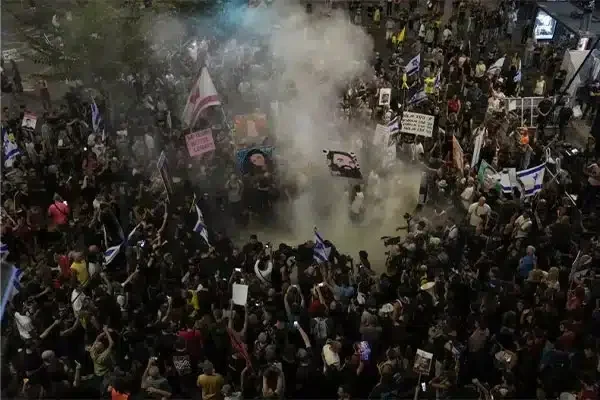
The Economist notes in a September 2023 piece: “The new winners of the Middle East represent a collaborative mindset that will likely make them richer. The losers, however, are a reminder that in a world where rules and principles matter less, no one comes to save you. Netanyahu (the herald of the New or Modern Middle East) should know that in this ‘New or Modern Middle East,’ there may be no forgiveness. Public opinion polls in Israel show that the majority hold his government responsible for failing to protect Israelis on the bloodiest day in the country’s history (October 7). After this round of conflict ends, reviving his political standing will likely be difficult.”
Suleiman Solon, a former Knesset member and international law professor at Brunel University London, states: “It is almost certain that after the conclusion of Israeli ground operations, and within a few months, Netanyahu will no longer be the Prime Minister of this country.”
نقشه حقیقی اسرائیل و علت حضور خونین آن در منطقه خاورمیانه چیست؟؟



No comment