 Arabic
 Persian
 English


Zionist Regime’s Occupation
The Israeli government has violated a ceasefire it committed to. In November 2012, Israel and Palestinian groups in Gaza, mediated by Egypt, signed a ceasefire requiring both sides to halt hostilities, and Israel was to lift restrictions on Gaza. However, the Zionist regime violated the ceasefire 191 times, with 10% of these violations resulting in Palestinian deaths and 42% leading to injuries or detentions.
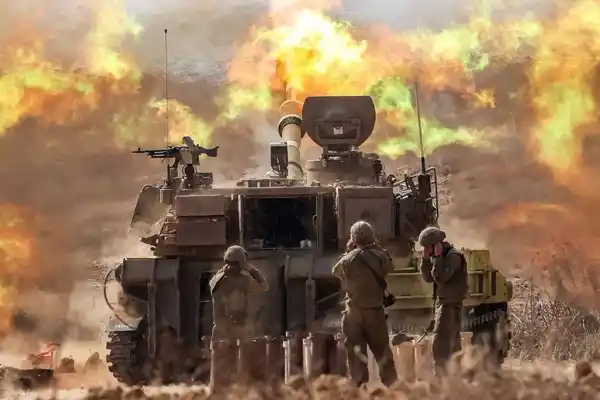
Israel has also established a complex network of military laws to suppress opposition to its actions, and senior government officials label Israelis defending Palestinian rights as “traitors.” Over the past 50 years, Israel has forced thousands of Palestinians to leave their homeland, occupied it, and illegally built settlements exclusively for Israeli Jewish residents. All Palestinian communities have been displaced by this settlement activity. Their homes and livelihoods have been destroyed, and access to water, land, and other natural resources has been severely restricted. Palestinians have also consistently faced violent attacks from the Israeli army and Jewish settlers.
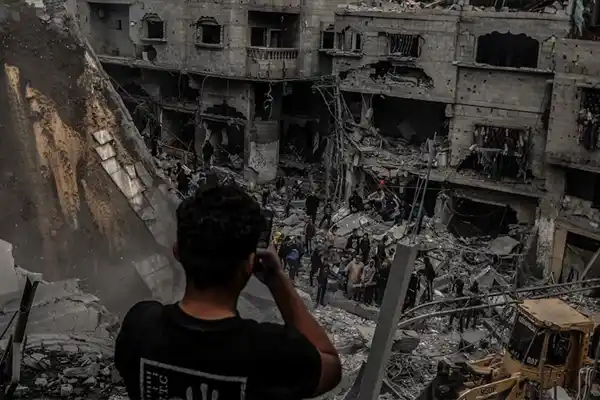
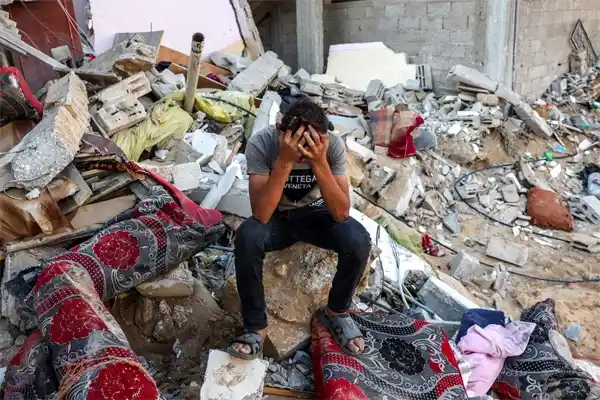
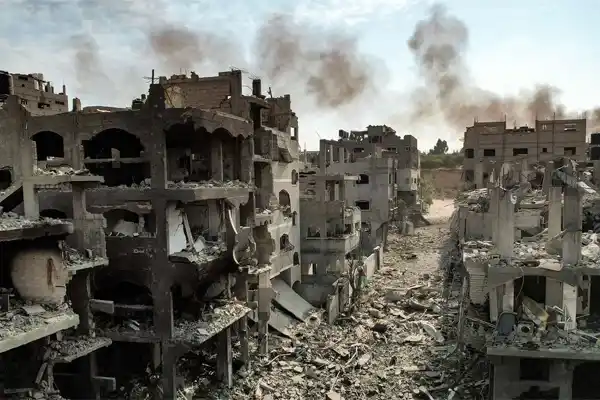
Israel’s policy of building and expanding illegal settlements in occupied Palestinian territories is a major violation of human rights resulting from the occupation. Over the past 50 years, Israel has destroyed tens of thousands of Palestinian properties and displaced large populations to build homes and infrastructure for the illegal settlement of Zionists in occupied territories. It has also seized Palestinian natural resources, such as water and agricultural land, for use in these settlements. The existence of settlements in occupied Palestinian territories violates international humanitarian law and constitutes a war crime. Despite numerous UN resolutions, Israel continues to seize Palestinian land and support the crimes of at least 600,000 Zionist settlers in the occupied West Bank, including East Jerusalem. According to statistics, until 2005, over 9,000 Israeli settlers illegally resided in Gaza. In addition to illegally building homes and infrastructure to sustain settlement activity in Palestinian territories, Israeli businesses and factories in these settlements have thrived economically, exploiting Palestinian resources illegally and depriving their rightful owners of these resources.
Destruction of Roads and Pathways in Palestine
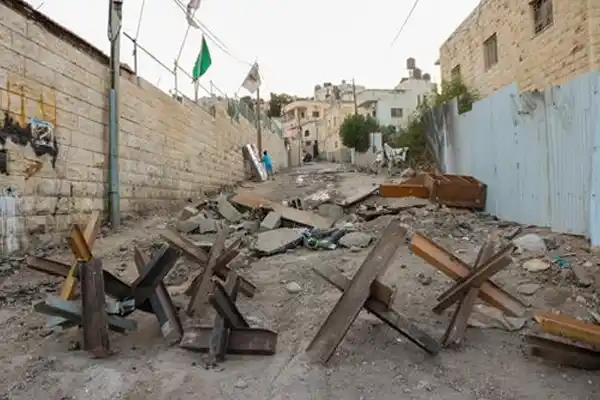
Israel’s establishment of hundreds of military barriers across the West Bank, such as checkpoints, roadblocks, and settler-only roads, along with a permit system, has turned simple daily tasks for Palestinians—such as going to work, school, or hospitals—into a constant struggle. Israel claims that the 700-kilometer winding wall was built to prevent Palestinian armed attacks on Israel. However, it does not explain why 85% of it was constructed on Palestinian land, including deep within the West Bank. This wall separates Palestinian communities, prevents families from connecting, denies Palestinians access to essential services, and isolates farmers from their land and resources, effectively crippling the Palestinian economy. Highly discriminatory and unjust laws have also deprived many Palestinians of the ability to marry, travel within their occupied homeland, or even visit and live with loved ones.

The Zionist regime’s criminal and occupying actions have consistently drawn condemnation and criticism from countries worldwide, with the UN General Assembly repeatedly issuing resolutions protesting these crimes. According to UN data, the highest number of General Assembly resolutions have been issued against Israel’s crimes. Since 2010, over 125 General Assembly resolutions have addressed the Zionist regime’s destructive actions. For example, in 2020, 17 resolutions, and the year before Operation Al-Aqsa Flood, 15 out of 28 General Assembly resolutions were against Israel’s occupation. The UN General Assembly has repeatedly filed legal complaints against the Zionist regime’s actions at the International Court of Justice (ICJ), which has consistently ruled against the regime and its crimes. The most recent case was South Africa’s legal complaint against Israel at the ICJ on December 29, 2023, for genocide. After expert review, the court recognized the occurrence of genocide and war crimes against Palestinians by the Zionist regime, stating that military attacks must cease immediately, further genocide must be prevented, and the regime must stop killing, displacing, and destroying Gaza’s infrastructure and people’s lives. Despite these rulings, Israel has intensified its actions without regard.
Legitimate Armed Resistance of Palestinians in Self-Defense
Resistance, including armed struggle against a colonial occupying force, has long been recognized and accepted under international law, with specific emphasis in these laws. According to international human rights law, following the adoption of the First Additional Protocol to the 1949 Geneva Conventions, national liberation wars were explicitly recognized as a legitimate and essential right for peoples under occupation. The UN General Assembly (UNGA), once described as the “global conscience,” has long emphasized issues such as the right to self-determination, independence, and human rights in light of growing attention to human rights laws. Since 1974, UNGA Resolution 3314 has prohibited countries from “any military occupation, however temporary.”
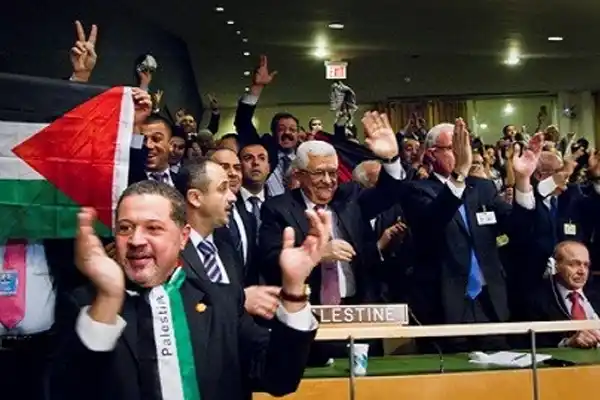
This resolution not only emphasizes the right to self-determination, freedom, and independence for peoples forcibly deprived of these rights, particularly those under colonial and racist regimes or other forms of foreign domination, but also recognizes their right to struggle against occupiers and receive assistance and support from other countries. The term “armed struggle” was referenced without a precise definition in this and many earlier resolutions concerning the right of a people to expel occupiers. This ambiguity was resolved on December 3, 1982, when UNGA Resolution 37/43 eliminated any doubt or debate regarding the “legal right” of peoples under occupation to resist occupying forces by any lawful means. This resolution reiterated the legitimacy and legality of peoples’ struggles to preserve their independence, territorial integrity, and national unity, and to liberate themselves from colonial domination and foreign occupation using all available means, including “armed struggle,” explicitly endorsing it.
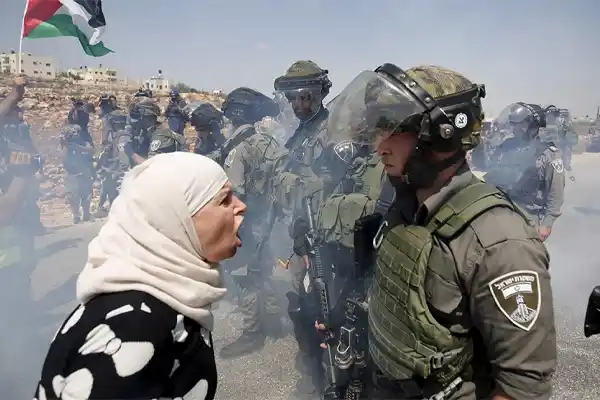
Israel’s Attempts to Undermine Resolution 3314 for Crimes in Gaza
Although Israel has repeatedly attempted to rewrite and alter this clear resolution to exclude its 50-year occupation of the West Bank and Gaza from its scope, these efforts have proven ineffective against the resolution’s precise emphasis. Paragraph 21 of the resolution strongly condemns “Israel’s aggressive and expansionist actions in the Middle East and the continuous bombing of Palestinian civilians, which constitute a serious obstacle to achieving Palestinian self-determination and independence.” European Zionists, long before the UN’s establishment, have consistently manipulated history. By migrating to and occupying Palestine, they portrayed themselves as a people under occupation—in a land where their historical connection was merely the right of passage. In fact, exactly 50 years before the UN recognized “armed struggle” as a (legitimate) means for indigenous peoples to liberate themselves from occupation, European Zionists, after a decade of brutal and deadly actions by groups like Irgun, Lehi, and other terrorist organizations, illegally used this concept to justify their crimes. This was because they not only massacred thousands of indigenous Palestinians but also targeted British police and military personnel, who had long maintained a colonial presence there.5
The path to achieving the legal right to self-determination for Palestinians under occupation has been arduous and costly. In Palestine, exercising this right, regardless of the means used—whether voice, pen, or gun—comes at a heavy price. Today, “courageous uprising against oppression and injustice” has become a popular slogan. But for occupied and oppressed Palestinians, the end of this path is imprisonment or martyrdom. They have had no other option but resistance and struggle. Silence for them means surrender. Silence means betrayal of all those who have risen and those who will continue to resist. This is incomprehensible to those who have not experienced or witnessed the constant yoke of oppression.
For over 70 years, Palestinians have not lived a single day without losing young men and women who, tragically, have seen greater honor and dignity in martyrdom than in a passive, submissive life under those who dictate the terms of their existence. Resistance and struggle are not strange or alien. In fact, by transcending time and place, resistance and struggle derive their meaning and fervor from the natural human desire for freedom and the ability to determine one’s own role and boundaries in life. In Palestine, however, such freedom does not exist. International law and fundamental rights recognize the right to self-determination, freedom, and independence for Palestinians under Zionist occupation, including, if necessary, the right to armed struggle against occupation. Long ago, Frederick Douglass, a prominent abolitionist who was once enslaved, wrote about struggle in a way that resonates in Palestine today: “If there is no struggle, there is no progress. Those who profess to favor freedom, and yet depreciate agitation, are men who want crops without plowing up the ground. They want rain without thunder and lightning. They want the ocean without the awful roar of its many waters. This struggle may be a moral one, or it may be a physical one, or it may be both; but it must be a struggle. Power concedes nothing without a demand; it never did, and it never will.”
In conclusion, the following questions can be answered definitively:
Do Palestinians, under UN laws and principles, have the “right to resist occupation”?
Yes, the UN General Assembly has explicitly affirmed the right of Palestinians to resist Israel’s military occupation, including through armed struggle. This is framed within the recognition of the right to self-determination for all peoples under foreign and colonial domination. Key UN resolutions in this regard include:
1. Resolution 3314 (1974): Recognizes the right to self-determination, freedom, and independence for all peoples living under colonial and racist regimes or other forms of foreign domination, affirming their struggle to achieve these rights and the provision of assistance and support to them.
2. Resolution 37/43 (1982): Emphasizes the undeniable right of the Palestinian people and all peoples under foreign domination and colonialism to self-determination, reiterating the legitimacy of their struggles for liberation from colonial domination and foreign occupation using all available means, including armed struggle.
3. Similar provisions are reiterated in numerous other General Assembly resolutions, such as Resolutions 2787, 34/44, and even Article 51 of the UN Charter. In fact, under Chapter VII, Article 51 of the UN Charter, Palestinians under occupation and foreign colonialism can receive cooperation and assistance from other countries in their struggle for liberation. According to this article, countries can act individually or collectively to counter threats, aggression, and foreign occupation for self-defense. It should be noted that Palestine is effectively a UN member state, enjoying all rights except voting rights. Currently, 146 countries legally recognize the State of Palestine, and all European countries have de facto recognized it as a state, making the provisions of this article applicable to the issue of Zionist occupation and Palestinian defense.
Is the “right to resist” recognized under international humanitarian law?
Yes, fundamentally, the laws of war, as outlined in the Fourth Geneva Convention (1949), did not explicitly address the use of force against an occupying power but did not prohibit it either. However, amendments in the First Additional Protocol to the Fourth Geneva Convention (1977) expanded the scope of this law, explicitly affirming that the use of force and armed struggle is legitimate in situations including “armed conflicts in which peoples are fighting against colonial domination, alien occupation, and racist regimes in the exercise of their right to self-determination.” This update to international law provided the necessary legal legitimacy for national liberation movements, including the Palestine Liberation Organization (PLO), to resort to arms, granting Palestinians the “legal right” to use force against military occupation.
Historically, Palestinians have resisted Zionist colonial domination through various means, employing all available methods. During the First Intifada (1987–1993), Palestinians adopted a strategy of “civil disobedience,” which was non-violent. They organized through public and popular committees, strikes, boycotts, and self-sufficiency projects, such as home-based economies under the banner of “victory gardens” and “revolutionary schools.” Famous strikes and boycotts, such as the BDS movement, were used as a form of non-violent pressure on Israel. Other forms of non-violent resistance, such as hunger strikes by Palestinian political prisoners, art, literature, and education in resistance, have also been employed by Palestinians.
Additionally, Palestinian armed resistance has been ongoing since the Great Arab Revolt of 1936–1939 against British occupation and increasing Zionist expansionism. Since the formation of the PLO in 1964, armed struggle and resistance have been considered the primary means of achieving liberation. This strategy continues today, with many Palestinians participating in various forms of armed attacks against Israel’s military occupation. Opinion polls consistently show that Palestinians in the West Bank and Gaza overwhelmingly support armed struggle as a means to end Zionist occupation.
The decline of the Dutch Empire



No comment