 Arabic
 Persian
 English

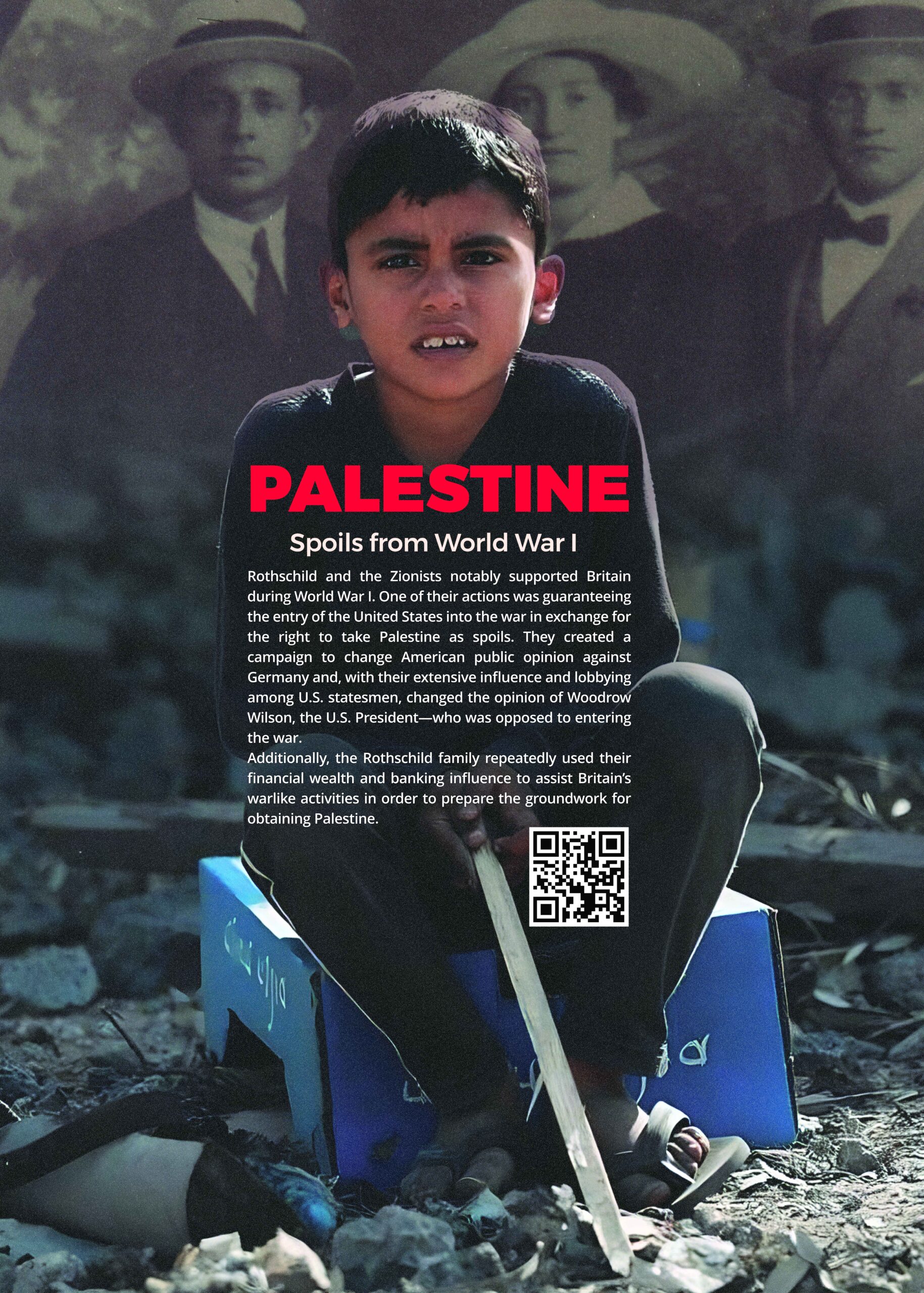
Support of the Rothschilds and Zionists for Britain During World War I
During World War I, the intertwined narratives of wealthy banking families and certain political movements shaped the fate of nations. Among these influential actors were the Rothschild family and Zionist leaders, who took significant steps to support Britain during the war. As the war continued, Britain sought victory not only through its military power but also by securing support from influential groups, including the Jewish community. In this regard, the Rothschilds, as a prominent banking and wealthy family, leveraged their financial and political influence, while the Zionist movement simultaneously pursued the establishment of a Jewish homeland in Palestine.
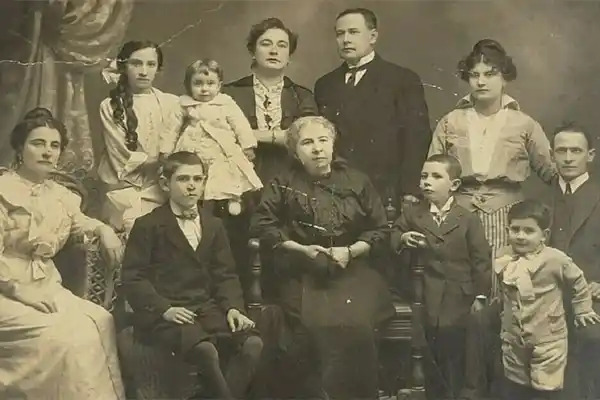
Key Actions by the Rothschilds and Zionists to Support Britain
- Securing Military Support for Britain: In a significant move, Louis Brandeis, the Rothschilds’ agent in America, sent a Zionist delegation to Britain in December 1916 while the British government was considering Germany’s ceasefire proposal. This delegation assured Britain that they would bring the United States into the war on their side, provided Britain facilitated the creation of a Jewish homeland in Palestine.
- Shaping Public Opinion: Following the agreement with the British regarding Palestine, Zionist leaders tirelessly worked to influence public opinion in the United States. Major American newspapers, which had previously published pro-German content, began printing anti-German material, demonizing Germans. Stories of German soldiers’ atrocities were widely published by Zionist-backed newspapers to boost support for Britain and sway American public opinion.
- Financial Support: The Rothschild family used their financial power to support Britain during the war, providing essential loans and resources to sustain Britain’s military efforts and supply needs. This financial support was critical when Britain faced significant logistical challenges.
- Balfour Declaration: On November 2, 1917, the culmination of Zionist lobbying efforts was reflected in the Balfour Declaration—a statement from the British government announcing support for the establishment of a Jewish homeland in Palestine. This declaration was seen not only as a reward for Zionist support but also aimed to secure financial and positive sentiment from Jews to aid Britain during the war.
- Collaboration with British Authorities: Zionist movement leaders, including Chaim Weizmann, worked closely with British authorities to ensure aligned interests. Weizmann’s efforts to remind British officials of their commitments to Jewish communities and the strategic importance of a Jewish presence in Palestine strengthened the connection between Zionism and Britain’s wartime strategy.
The actions of the Rothschilds and Zionist leaders during World War I not only shaped the war’s outcome but also played a fundamental role in forming the future geopolitical landscape of the Middle East. Through the aforementioned actions and shaping diplomatic turning points, they established themselves as key players in the wartime narrative.


What Support Did Zionists Provide to Britain to Defeat the Ottomans?
During World War I, Zionists supported Britain in various ways, with the primary goal of ensuring the defeat of the Ottoman Empire, Germany’s ally. Some key areas of Zionist support included:
- Political and Technological Collaboration: The Zionist movement actively sought British support for its aspirations, believing that a complete victory over the Ottomans would provide a better prospect for establishing a Jewish homeland in Palestine. Zionists believed Britain had the political will and military power to protect and advance their interests in the region. Prominent Zionist figures like the Rothschilds played a crucial role in securing British support for the Zionist cause, effectively intertwining their political support with Britain’s war aims against the Ottoman Empire. Lord Walter Rothschild, a key advocate of Zionism and instrumental in securing the Balfour Declaration, used his influence in British society to promote the idea of a Jewish homeland in Palestine as a strategic outcome for Britain in the war. His connections with influential politicians enabled him to advocate for policies that addressed Jewish community demands while aligning with the British Empire’s wartime interests. This relationship was mutually beneficial, as Zionists sought British support to establish a foothold in Palestine, while Britain recognized that Zionist support could help stabilize and manage Ottoman territories, ensuring military objectives. Additionally, American Zionist leaders like Chaim Weizmann actively collaborated with key British political figures to ensure the Zionist vision for a Jewish state remained appealing and significant in Britain. Weizmann’s scientific contributions, particularly developing a method for producing acetone, had significant implications for wartime Britain, demonstrating how Zionist support extended beyond political lobbying. Influential Zionist figures, including Louis Brandeis in the United States, successfully rallied public opinion in Britain and America in favor of Zionism as part of wartime diplomacy. This strategic alignment highlighted the Jewish community’s importance in the broader context of wartime politics and showcased Zionist leaders’ adeptness at leveraging the political landscape to achieve their goals in the name of supporting Britain against the Ottomans.
- Military Collaboration: The establishment of the “Jewish Regiment” in 1917 reflected direct Zionist military support for Britain. Although the Zionist movement’s primary focus was political, Jewish participation in military efforts aligned with Britain’s agenda later bolstered Zionist claims for a homeland in Palestine. The Zionist movement organized covert military units to assist British forces. For example, the “Zion Mule Corps,” formed in 1915, primarily consisted of Jewish volunteers exiled from Palestine by the Ottomans. Although this unit did not fight in Palestine, it participated in the Gallipoli campaign. The “Jewish Regiment,” composed of Jewish volunteers, also aided the British in the Jordan Valley battles between 1917 and 1918.
- Pre-War Geopolitical Influence: Zionists also aimed to secure “capitulations” from the Ottoman Empire, granting privileges to British citizens. These privileges deepened British involvement in Palestine, laying the groundwork for establishing a future Jewish state.
Overall, during World War I, the relationship between Zionists and Britain was significantly shaped by extensive cooperation aimed at defeating the Ottoman Empire, which controlled Palestine at the time. Led by figures like Chaim Weizmann, Zionists understood the strategic importance of aligning with Britain, which sought to secure victory against the Central Powers. The Zionist movement’s primary goal was to ensure Palestine fell under British control after the Ottoman defeat. By early 1917, Zionists had one goal: Britain’s victory in the war to realize their aspirations for a Jewish national homeland in Palestine. This alignment was not merely hopeful but a critical opportunity to increase support for Britain, influencing post-war arrangements in favor of Zionist goals.
Significant efforts were made by Zionist leaders to bolster support for Britain. This engagement included lobbying British officials to present Jewish settlement in Palestine as a key part of Britain’s post-victory imperial strategy. Notably, in 1916 and 1917, Britain’s motivation was to leverage Jewish support—particularly from influential communities in the United States and Russia—to shift the war’s balance in their favor. Consequently, Zionist lobbying successfully secured promises of support from some governments, including the United States, partly reflected in the significant Balfour Declaration in favor of Zionists. This collaboration paved the way for Britain’s ultimate rule over Palestine, intertwining the British Empire’s fate with Zionist aspirations as the war neared its end.
US and Israeli strategies to destabilize Iran




No comment